

 Terra Pulse Technical Team
What does landscape maintenance for facilities include?
Plant care, soil condition and ongoing inspections
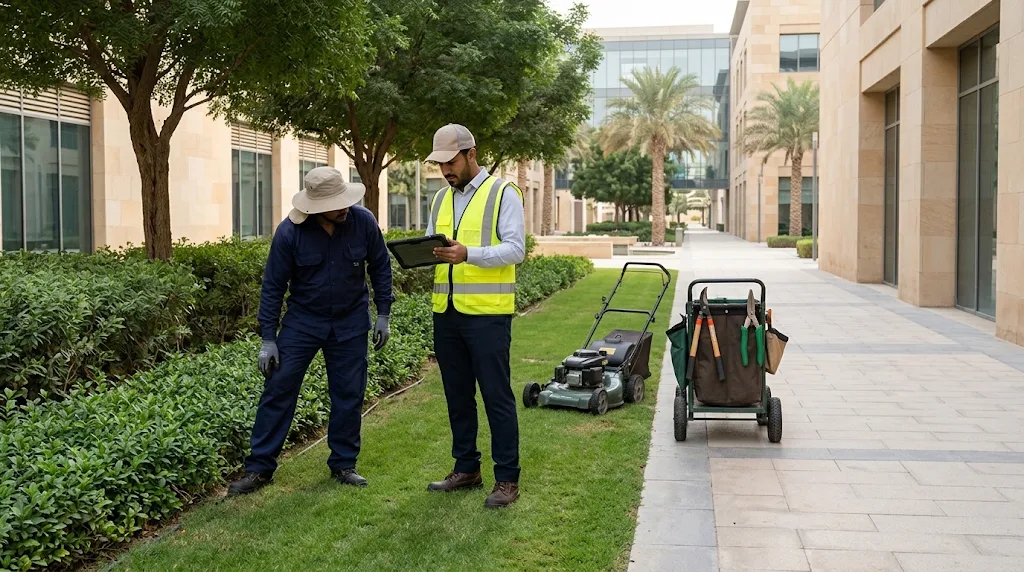
Landscape maintenance covers the recurring work needed to care for lawns, trees, shrubs and planted beds. Depending on the contract, this can include mowing, edging, pruning, weed removal, soil assessment, plant health monitoring and approved replacements. The plan connects these tasks with the condition expected from each area.
Prepare the plan through six steps.
- Map the planted areas and identify their plants, dimensions, access points and maintenance constraints.
- Record the starting condition with dated photographs, defects and agreed priorities for each area.
- Define the maintenance tasks, responsibilities, materials, equipment and separately approved work.
- Set task frequencies and condition triggers around plant growth, seasons and facility use.
- Agree inspection criteria, reporting fields and coordination with irrigation and facility teams.
- Review results and update the plan when plant condition, site use or recurring issues change.
For the wider service scope, see Terra Pulse landscaping and irrigation services.
How do you inventory the planted areas?
Site mapping, plant types and measured areas
Begin with a current site plan and verify it during a walk-through. Give each lawn, planting bed and tree group a location reference that can also appear in photographs, work orders and reports. A simple code such as “Entrance Bed A” helps different teams identify the same place.
- Measure lawn and planting-bed areas using a consistent method.
- Record tree and shrub species where known, with quantities and approximate size.
- Identify recently planted areas and established planting separately.
- Mark irrigation zones, utility covers, access routes and equipment restrictions.
- Record shaded, exposed, heavily used and difficult-to-reach areas.
Flag uncertain plant identification or approximate measurements for confirmation. Record the inventory date and update the register after approved planting changes. This gives pricing, labour planning and performance reviews a shared reference.
How do you record the site condition at the start of a contract?
Photographs, observations and agreed priorities
Carry out a joint condition survey before routine maintenance begins. Photograph each area from repeatable positions and record existing bare patches, damaged plants, weed concentrations, soil erosion and access problems. Connect every observation to its location reference.
The baseline record should include the observed condition, any available history, the proposed next action and the person responsible for authorising it. Distinguish observations from confirmed causes. For example, “brown patch beside the entrance path” records a visible condition, while its cause requires investigation.
- Agree which defects need early investigation or corrective work.
- Identify plant replacements that require separate approval.
- Record outstanding irrigation issues and their work-order references.
- Set a review date for confirming progress against the starting photographs.
Keep the signed survey with the contract documents so later reviews can account for the site’s original condition.
How do you divide the site into maintenance zones?
Planting type, exposure and intensity of use
Group areas that need similar work, equipment and access arrangements. A shaded shrub courtyard, a frequently used lawn and an exposed perimeter planting strip may need different schedules even when their areas are similar.
Record the following for each maintenance zone.
- Planting type and the condition expected at inspection.
- Tasks, equipment and skills needed to maintain it.
- Available working hours and restrictions on noise or access.
- Links to irrigation zones and other maintenance responsibilities.
- Extra attention required during establishment or recovery.
Keep the map understandable to the people doing the work. Maintenance zones can follow the planting and access pattern while retaining references to irrigation sectors. Where several teams share a location, define the handover point and who confirms that the full task is complete.
How do you set a lawn mowing schedule?
Growth rate, grass type and turf condition
Identify the grass type and agree an appropriate maintained height with a competent landscape specialist. Build the mowing schedule around observed growth and site use. Inspection visits can remain regular while the need to mow changes through the year.
A widely used mowing principle is to remove no more than about one-third of the leaf height in one cut. The target height still depends on the species and site conditions. Check blade sharpness, mower settings and the finished surface during the visit.
- Record uneven cutting, scalped areas and damage around obstacles.
- Adjust equipment and routes where repeated wheel traffic affects the ground.
- Protect irrigation heads, tree bases and planting edges.
- Review the interval when growth changes or the lawn shows stress.
University of Minnesota Extension explains the mowing principle and equipment considerations. Local species advice determines the working height.
How do you organise tree and shrub pruning?
Pruning purpose, timing and plant location
Give each pruning task a clear purpose. It may address dead branches, clearance beside a path, shrub form or a plant-specific maintenance need. Record the species, location, intended result and suitable working method before scheduling the task.
Timing depends on plant biology, flowering behaviour, condition and local circumstances. A review by a competent tree specialist is appropriate when work involves mature trees, large branches, structural concerns or difficult access. The job plan should also account for nearby buildings, vehicles and pedestrians.
- Agree the intended clearance or plant form.
- Select suitable tools and access equipment.
- Arrange an exclusion area and debris collection.
- Photograph the completed work and record observations for follow-up.
Specify appropriate pruning cuts and avoid indiscriminate topping. The International Society of Arboriculture’s pruning guidance explains pruning objectives and the damage associated with topping.
How do you monitor plant health?
Changes in growth, colour and visible condition
Use repeatable observations to track how plants change between visits. Record leaf colour, new growth, canopy density, wilting, damaged stems and dieback. Compare the affected plant with nearby plants of the same type and note differences in shade, traffic and watering conditions.
A useful observation describes the pattern and its development. “Leaf browning increased on the outer edge of Bed B since the previous visit” gives the next person more information than a general comment about poor appearance.
- Photograph the whole plant and the affected part.
- Record when the symptom appeared and whether it is spreading.
- Check recent maintenance, planting and irrigation changes.
- Assign an investigation owner and follow-up date.
Leaf colour and wilting can have several causes. Use the evidence to decide whether irrigation checks, soil testing or specialist plant diagnosis are needed.
How do you manage bare patches and dead plants?
Investigating the cause and defining replacement work
Map the affected locations and investigate why the planting failed. Repeated damage in the same place may relate to water distribution, drainage, shade, soil condition, traffic or plant suitability. Record the findings before preparing a replacement proposal.
The proposal should identify the replacement area or quantity, plant specification, preparation work, establishment care and inspection arrangements. Confirm who supplies the materials and who approves any change in species or size.
- Link the replacement request to the original defect record.
- State corrective work needed before planting.
- Agree protection during establishment.
- Define how establishment care and later routine maintenance connect.
For example, repeated failure beside a pedestrian shortcut calls for a review of circulation and protection. Outdoor space planning for facilities explains how planting layouts relate to routes and everyday use.
How do you inspect the soil around planting?
Moisture, compaction, erosion and surface cover
Include soil observations in the normal inspection route. Check for persistent wetness, very dry areas, surface crusting, exposed roots, erosion and evidence of repeated foot or equipment traffic. Record the location and recent weather or irrigation conditions.
Surface appearance provides a starting point. Where a problem persists, arrange an appropriate assessment of the root zone, drainage or soil properties. Check buried-service information before intrusive investigation or mechanical work.
- Compare affected and healthier areas under similar conditions.
- Record changes in soil level around tree bases and planting edges.
- Inspect mulch condition where it forms part of the landscape specification.
- Track whether the observed issue returns after corrective work.
Choose any treatment around the diagnosed condition, root protection and site constraints. Document the reason for intervention so its result can be reviewed at a later visit.
When does the soil need improvement or plant feeding?
Assessment findings and documented treatments
Base soil improvement and feeding decisions on plant needs, site history and appropriate testing. Review previous applications and recent changes before adding materials. Where nutrient status, pH or salinity is relevant to a recurring problem, specify a suitable laboratory assessment and interpretation.
For each approved application, record the product, treated area, quantity, date and responsible person. Add instructions for irrigation coordination and any access arrangements required by the product and work method.
- Define the problem the treatment is intended to address.
- Use recommendations appropriate to the plants and local soil conditions.
- Account for nutrients supplied by other materials already applied.
- Set a follow-up inspection to assess the response.
Soil testing guidance from University of Minnesota Extension explains how testing informs nutrient decisions. The local sampling plan and interpretation should suit the facility’s planting and soil.
How do you manage weeds and mowing waste?
Removal, collection and clean pedestrian routes
Record weed locations and the extent of growth so the team can choose an appropriate control method and review recurrence. Include planting edges, joints beside beds and areas disturbed by recent work. Protect desirable plants and irrigation components during removal.
Define how crews handle cut grass, leaves, branches and soil from the work. Keep pedestrian routes, entrances and drainage inlets clear at completion. Confirm the collection point and removal arrangements within the agreed scope.
Clipping management depends on the mowing conditions and site requirements. Fine, evenly distributed clippings may be returned to suitable turf, while heavy clumps need attention because they can smother the grass. Disease conditions may also affect the handling decision.
University of Minnesota Extension discusses when to retain or collect lawn clippings. Record the approach adopted for each facility.
How do you document signs of pests or disease?
Recording spread and referring findings for diagnosis
Create a record when the crew finds unusual leaf damage, insects, deposits, stem lesions or spreading decline. Include the plant identity where known, location, affected parts, approximate extent and photographs. Record recent watering, feeding and maintenance changes that may help diagnosis.
Use a competent specialist to identify the cause and decide whether intervention is needed. Pest management can combine cultural, physical, biological and other suitable methods, selected around the organism and the site.
- Compare findings across affected and unaffected plants.
- Keep treatment decisions linked to the inspection evidence.
- Document approved measures and their application records.
- Reinspect to assess the result and recurrence.
The UC Integrated Pest Management programme explains the role of identification and monitoring in treatment decisions. Any product use requires appropriate selection and compliance with applicable instructions and local requirements.
How do you coordinate with the irrigation team?
Coverage observations, work orders and repair follow-up
Give landscape crews a straightforward way to report dry patches, persistent wet areas, overspray, damaged outlets and water reaching paths. The report should identify the maintenance location, irrigation sector where known, time observed and photographs taken during operation.
The irrigation team can investigate the relevant supply, controls and distribution components. Record the work-order reference and arrange a follow-up inspection of the planting after the repair. Plant recovery may need monitoring beyond the mechanical completion date.
- Agree who reports, investigates and authorises repair work.
- Coordinate mowing and bed work around exposed components.
- Record any changes to schedules or outlet positions.
- Check both the repaired system and the affected planting.
See the irrigation system maintenance guide for fault investigation, and commercial irrigation maintenance services for the related service scope.
How do you adjust the landscape maintenance schedule by season?
Plant growth, weather and changing site use
Review the schedule when growth, temperature, weather exposure or facility use changes. Sites across Saudi Arabia have different local conditions, plant selections and operating patterns. Use observations from the actual facility to set the workload.
The following table provides a planning framework. Agree frequencies after the baseline survey and revise them using inspection findings.
| Review point | Work to consider | Record required |
|---|---|---|
| Each scheduled visit | Plant condition, weeds, waste, access and irrigation symptoms | Location-based checklist and photographs |
| When growth reaches the agreed mowing trigger | Mowing, edging and clipping management | Area completed and observed condition |
| At a suitable plant-specific pruning window | Approved pruning and clearance work | Purpose, locations and completion photographs |
| During the agreed seasonal review | Task frequency, workload and coordination with irrigation | Updated schedule and reasons for changes |
| After unusual weather, repairs or repeated defects | Targeted inspection and corrective work | Findings, action owner and follow-up date |
How do you organise maintenance near entrances?
Visit timing and pedestrian movement
Check visitor peaks, staff arrival times, deliveries and any events before booking work around entrances. Agree where equipment can be parked, how materials reach the area and who coordinates with security or reception.
The work plan should describe how the area is controlled while equipment operates and how people reach the building. Confirm any temporary route with facility management and keep it clear and usable throughout the activity.
- Use suitable work-zone controls and visible signs.
- Position equipment, branches and collection bags away from circulation.
- Coordinate noisy tasks with operating hours.
- Inspect the path for clippings, debris and water before reopening.
Include entrance work in the visit report, recording the area, time and person who confirmed completion. Where public movement repeatedly disrupts the task, review the working window or method with the facility team.
What should the landscape maintenance contract include?
Labour, equipment, materials and replacements
Write the scope against the site inventory and maintenance zones. Identify the work covered by the recurring fee, the conditions that trigger additional work and the approval route for variations. Connect task descriptions to inspection criteria so both parties can review delivery consistently.
- Areas, plant quantities and the baseline condition survey.
- Tasks, visit arrangements and plant-dependent scheduling.
- Staffing, supervision, equipment and material responsibilities.
- Arrangements for plant replacements and establishment care.
- Interfaces with irrigation, pest specialists and waste collection.
- Reporting, follow-up visits and outstanding-action tracking.
Clarify access equipment, major tree work, laboratory testing and extraordinary repairs where relevant. State how quotations for additional work are prepared and authorised. The documented scope should allow the facility team to identify who acts when a defect crosses several service responsibilities.
How do you measure landscape maintenance quality?
Plant cover, recurring defects and completed actions
Agree a small set of measures that reflect the planting and contract scope. Use the baseline photographs and repeat inspections to track whether the condition is stable, improving or declining. Define each measure’s location, assessment method and review interval.
- Planting condition. Record cover, bare areas, damaged plants and changes in appearance.
- Work completion. Compare completed tasks with those due during the reporting period.
- Defect recurrence. Track issues returning at the same location after closure.
- Follow-up. Review open actions, approvals and agreed completion dates.
- Site usability. Check edges, debris and the condition of adjoining paths.
Set acceptable conditions with the facility team and account for establishment periods or approved recovery work. Where a measure uses a percentage, define the assessed area or total quantity and keep the calculation consistent between reports.
How do you prepare a maintenance visit checklist?
Completed work, photographs and follow-up ownership
Use a checklist that connects the scheduled task with its result. Each location needs enough detail for a reviewer to understand what happened and what remains open. Include a field for work that could not proceed and its reason.
| Field | What to record |
|---|---|
| Visit identification | Date, arrival and departure, crew and supervisor |
| Location | Zone code and specific lawn, bed or tree reference |
| Planned and completed work | Task, quantity where relevant and completion status |
| Condition and evidence | Findings, photographs, measurements or linked test results |
| Materials and changes | Approved products, quantities, replacements and programme changes |
| Follow-up | Action, owner, approval needed and review date |
| Completion check | Supervisor review and confirmation that adjoining routes are clear |
Keep action references consistent between visits. A repair awaiting irrigation testing should retain its linked work order until the agreed checks and plant follow-up are recorded.
How do you compare two proposals for the same site?
Scope, frequency, exclusions and reporting
Send each provider the same inventory, baseline survey and service requirements. Ask them to explain visit coverage, task scheduling, supervision, materials and separately priced work. Compare the total scope and the evidence available to verify completion.
Consider a hypothetical office facility with entrance lawns, shrub beds and mature trees.
| Comparison point | Proposal A | Proposal B |
|---|---|---|
| Routine service | General maintenance visits with tasks to be clarified | Visits linked to a location-based task schedule |
| Tree work | Pruning mentioned without an access allowance | Routine shrub pruning defined, major tree work separately assessed |
| Replacements | Plant supply and establishment care unspecified | Approval, supply and establishment responsibilities stated |
| Reporting | Attendance confirmation | Completed tasks, photographs and open actions |
Request the missing details, then place both offers on a common basis. Include expected extras in the comparison and confirm how recurring defects will be investigated. This example illustrates a review method using assumed proposal details.
Frequently asked questions about landscape maintenance for facilities
What is the difference between landscape maintenance and irrigation system maintenance?
Landscape maintenance covers plant care, mowing, pruning, weeds and soil observations. Irrigation maintenance covers water delivery, pipes, valves, outlets and controls. Define both scopes and their coordination responsibilities in the contract.
How often does a facility need a maintenance visit?
Set visit frequency using planting type, growth, site condition, season and facility use. Agree routine inspections and the conditions that trigger extra work, then review the interval using recorded findings.
How should recurring dry patches be investigated?
Map and photograph the affected area, then review irrigation coverage, soil moisture, drainage, shade, traffic and recent work. Assign the investigation and check the planting again after the identified cause has been addressed.
Does the contract include replacing dead plants?
Replacement depends on the agreed scope. Specify plant supply, preparation, approvals, establishment care and any separate charges. Link replacement requests to the condition record and the investigation of repeated losses.
How can monthly maintenance proposals be compared?
Give providers the same inventory and service requirements. Compare tasks, visit coverage, labour, equipment, materials, replacements, reporting and separately priced work. Ask for missing details before comparing the total cost.
What should a maintenance visit report contain?
Include the date, crew, location references, planned and completed tasks, findings, photographs, materials and open actions. Give each follow-up item an owner and review date, with linked irrigation work orders where relevant.
Should the maintenance schedule change between summer and winter?
Review it as growth, weather and site use change. Adjust mowing, inspections and other tasks to the actual plants and local conditions, and coordinate any irrigation changes with the responsible team.
How can maintenance be coordinated with visitors?
Agree working windows with facility management, control the work area and keep agreed pedestrian access clear. Coordinate equipment and deliveries, then inspect adjoining paths before returning the area to normal use.
