

 Terra Pulse Technical Team
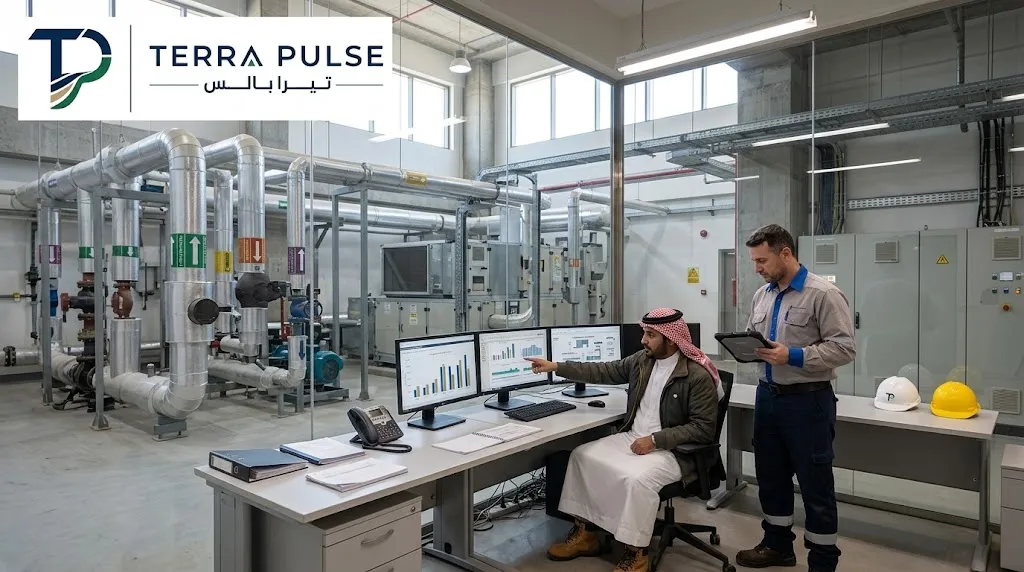
This guide explains 10 practical approaches, how to audit consumption, select performance indicators, assess financial viability and verify results. Monitoring, maintenance and asset information can be organised through facility management, operations and maintenance services, according to the facility’s needs and agreed scope.
What Does Energy Efficiency Mean?
Energy efficiency in buildings means providing the required service, such as cooling, lighting or equipment operation, with less energy or better performance per unit of energy, while accounting for operating conditions and service quality.
Energy conservation also includes managing use and avoiding unnecessary operation. Equipment improvements, operating schedules, maintenance and user awareness can work together within one plan.
Lower consumption alone does not prove improved efficiency. It may result from reduced occupancy, lower production or milder weather. Results should therefore be assessed against an appropriate baseline and comparable operating conditions.
Why Do Buildings Need to Improve Energy Efficiency?
Understanding energy use helps direct operating decisions and investment towards actual needs. It can also reveal systems running outside required hours or under unsuitable conditions.
- Cost management: Identify waste and prioritise measures according to their financial viability.
- Operational improvement: Match equipment and schedules to demand and use.
- Maintenance support: Detect changes in performance that warrant investigation.
- Replacement planning: Assess equipment using operating performance and life-cycle costs.
- Clear responsibilities: Define who reviews information and implements corrective action.
- Sustainable buildings: Reduce resource use while maintaining comfort and service quality.
Installing a particular technology does not automatically deliver savings. Results depend on design, configuration, operation, maintenance and continued review after implementation.
10 Practical Ways to Improve Energy Efficiency in Buildings and Facilities
| Approach | Main action | What should be reviewed? |
|---|---|---|
| 1. Audit consumption | Establish a baseline and identify sources of energy use. | Bills, meters, occupancy and operating hours. |
| 2. Improve HVAC performance | Review operation, controls and distribution. | Demand, comfort, indoor air quality and system condition. |
| 3. Improve lighting efficiency | Select suitable luminaires and controls. | Power, lighting quality and operating hours. |
| 4. Optimise controls | Review BMS schedules and operating sequences. | Sensors, commands, overrides and alarms. |
| 5. Improve the building envelope | Assess insulation, shading and air leakage. | Roofs, walls, windows and doors. |
| 6. Match operation to use | Manage equipment and zone operating hours. | Occupancy, critical loads and exceptions. |
| 7. Improve maintenance | Address faults and deteriorating performance. | Cleanliness, leakage, adjustment and fault history. |
| 8. Select suitable equipment | Compare alternatives against actual operating requirements. | Part-load performance, integration and life-cycle costs. |
| 9. Use submetering | Separate consumption for important systems or areas. | Data quality, measurement boundaries and corrective opportunities. |
| 10. Engage users and review results | Establish responsibilities, training and ongoing monitoring. | Operating practices, indicators and sustained improvement. |
Suitable measures should be selected after assessment; a building may not need all ten. Interactions between measures should also be reviewed so that overlapping savings are not counted more than once.
How Is an Energy Consumption Audit Carried Out?
An audit identifies where energy is used, potential improvements and the information needed to assess them. Its depth depends on the facility’s size, system complexity and the investment decision being considered.
- Define the boundaries: Identify the buildings, systems and energy sources included.
- Collect information: Review bills, meter readings, operating hours and occupancy or production.
- Identify systems: Record HVAC, lighting, pumps, equipment and specialist loads.
- Inspect the site: Compare actual operation with schedules, design information and records.
- Measure where necessary: Record loads, operating hours or conditions to understand consumption.
- Identify opportunities: Consider operation, maintenance, controls, replacement and building improvements.
- Assess viability: Estimate costs, potential savings, constraints and interactions.
- Prepare verification arrangements: Define how results will be assessed after implementation.
Information should cover appropriate operating cycles and seasons. A year of data can be a useful starting point, but its quality and any changes in building use still need to be examined.
In Saudi Arabia, the proposed audit scope and any provider qualification or licensing requirements should be checked with the relevant authority. A routine maintenance inspection does not automatically constitute a specialist energy audit.
Which Systems Consume the Most Energy?
The answer varies with building use, climate and operating hours. HVAC may be a significant load in one building, while process equipment, commercial refrigeration or data centre systems dominate another facility.
- Cooling, ventilation and heating, according to location and use.
- Internal and external lighting.
- Pumps, fans and motors.
- Water heating.
- Office equipment, plug loads and connected appliances.
- Lifts and specialist equipment.
- Process, refrigeration and industrial loads where present.
A universal ranking or fixed percentage should not be applied to every building. Equipment inventories, measurement and analysis help identify the systems that deserve priority.
When Is Equipment Replacement Appropriate?
Replacement should be considered after reviewing condition, performance and the potential for repair or adjustment. Alternatives should be compared against actual demand, part-load performance, compatibility, maintenance and expected service life.
The highest-capacity or lowest-priced product is not necessarily the most suitable. Poor design or controls may also limit the benefit of new efficient equipment.
Understanding MEP systems and their operation and maintenance requirements helps explain the relationships between electrical, mechanical and control systems within a building.
How Can HVAC Energy Efficiency Be Improved?
Improvement starts by reviewing the required service, loads and indoor conditions, then comparing these with equipment, distribution and control performance.
- Review operating schedules against zone occupancy.
- Check sensors, settings and operating sequences.
- Assess air or water distribution and balancing where necessary.
- Address leakage or damaged insulation affecting performance.
- Review component cleanliness and filter condition according to instructions.
- Assess equipment operation at different loads and its sequencing.
- Confirm that changes maintain ventilation, comfort and humidity requirements.
Consumption should not be reduced by disabling required ventilation or accepting unsuitable indoor conditions. Adjustments must preserve the requirements of the space and its occupants or processes.
How Does Maintenance Help Reduce Electricity Consumption?
Maintenance can identify faults, leaks, inaccurate sensors and deteriorating components. Waste may continue if the visible problem is repaired without investigating its cause or effects on the wider system.
Tasks should reflect the asset, manufacturer instructions and operating conditions. Results should be recorded and the effect of repairs checked. Technical modifications can be coordinated through MEP and electromechanical works, according to the project scope.
How Can Lighting Energy Consumption Be Reduced?
Lighting improvements combine suitable equipment with effective operating controls while maintaining the required lighting quality. Comparing electrical wattage alone does not account for distribution, glare or suitability for the task.
- Review existing luminaires and operating hours.
- Assess LED alternatives appropriate to the location and function.
- Divide control zones according to use.
- Consider occupancy sensing or daylight control where suitable.
- Configure schedules and dimming and verify component compatibility.
- Check lighting after changes and document operating settings.
Emergency lighting, safety lighting and areas with specialist requirements must retain their required functions. Savings should be assessed under actual operation rather than inferred solely from product information.
What Is the Role of Building Management Systems?
Building management systems, or BMS, can monitor and control connected services according to their design capabilities. They may provide scheduling, alarms, trends and access to settings, but installation alone does not guarantee energy savings.
- Match schedules to actual use.
- Identify equipment operating outside required hours.
- Review start and stop commands and conflicting operating states.
- Monitor readings, alarms and manual overrides.
- Check sensor and actuator responses.
- Document changes and assess their effect on performance.
How Do BMS and Energy Management Systems Differ?
A BMS focuses on monitoring and controlling the systems connected to it. Energy information tools may add meter analysis, comparisons and anomaly detection, depending on their capabilities.
An organisational energy management system, or EnMS, covers policies, responsibilities, objectives, procedures and continual review. A facility may therefore need better management and use of existing information rather than a new software platform alone.
Digital facility monitoring and asset information management can support the organisation of readings, work orders and reports, according to available systems, data and the agreed contract.
How Does Thermal Insulation Affect Energy Use?
Heat transfer through the building envelope involves roofs, walls, windows and doors. Inadequate insulation, shading or air sealing can increase the load placed on HVAC systems.
Assessment begins with design information, actual condition, exposure, damage and leakage, followed by comparison of suitable options. Improvements may include insulation, shading or treatment of unwanted air leakage.
Moisture, waterproofing, fire, ventilation and structural requirements should be reviewed when modifying the envelope. An intervention should not be selected using insulation performance alone at the expense of another building function.
Where alterations involve construction, structural or architectural work, interfaces should be coordinated with civil works and the relevant disciplines, according to the design and approvals.
When Is Renewable Energy a Suitable Option?
Solar generation may reduce electricity purchased from the grid, but it does not necessarily mean the building uses less energy to provide the same service. Efficiency improvements and electricity generation should be distinguished when assessing results.
Suitability depends on available space, shading, roof condition, structural loads, demand timing, cost, maintenance and local connection and approval requirements.
Assessing waste reduction alongside generation opportunities can help avoid sizing a system around consumption that could be improved. Generation, self-consumption and grid exchange should be recorded separately where relevant.
Not every site is suitable, and financial returns are not uniform. The decision requires a technical and financial assessment and review of project-specific installation and connection requirements.
Which Indicators Measure Building Energy Performance?
Indicators should answer questions relevant to the building, with clear measurement boundaries, reporting periods and data sources.
| Indicator | How it is expressed | Interpretation |
|---|---|---|
| Electricity consumption | Kilowatt-hours over a defined period. | Review alongside weather, occupancy and operating hours. |
| Energy use intensity | Annual energy divided by a defined floor area. | Use consistent area definitions and energy boundaries. |
| Activity-related consumption | Energy per appropriate production or occupancy unit. | Select the denominator to suit the facility’s activity. |
| Maximum electrical demand | Kilowatts over the applicable measurement interval. | Distinguish demand from total energy consumption. |
| Consumption outside occupied hours | Energy during defined periods. | Account for loads required to maintain essential services. |
| Verified savings | A calculated difference using a baseline and verification plan. | Account for relevant changes in operating conditions. |
How Does Submetering Help?
Submeters can separate consumption for an important system or area, such as HVAC, lighting or part of a facility. Measurement points should be chosen to support decisions, rather than simply increase the number of readings.
Meter installation, units, time alignment, data quality and measurement boundaries should be checked. Identified deviations should then lead to review or action, rather than remain as dashboard information.
How Do You Prepare an Energy Reduction Plan?
- Define the baseline: Record consumption, the conditions it represents and project boundaries.
- Prioritise opportunities: Consider expected impact, cost, viability and risk.
- Review interactions: Assess how each measure affects other measures.
- Plan implementation: Define responsibilities, approvals, procurement and shutdown requirements.
- Set acceptance criteria: Address performance, comfort, safety and testing.
- Plan verification: Define information, methods, reporting periods and responsibilities.
- Maintain improvement: Continue maintenance, training and review of deviations.
Match Operating Hours to Actual Use
Review zone and equipment schedules against occupancy and actual demand, including holidays, changes and exceptions. Distinguish adjustable services from critical loads or those required for safety and ongoing processes.
Engage Users and the Operations Team
Allocate responsibility for schedule changes, fault reporting, override review and corrective action. Awareness should focus on specific practices that users can apply, while ensuring that people are not compensating for operational faults with actions that increase consumption.
To begin, prepare utility bills, system information, operating hours and recurring issues, then discuss your facility’s operating needs with Terra Pulse on WhatsApp to identify an appropriate review and service scope.
How Is the Return on Investment Calculated?
Financial assessment starts by estimating energy savings and converting them into financial effects using the actual tariff and billing arrangements. Operating, maintenance, replacement and measurement costs should also be reviewed.
- Energy savings: Adjusted baseline consumption minus consumption after implementation, within the defined comparison boundaries.
- Net annual benefit: Financial savings and other documented benefits, less additional project-related costs.
- Simple payback: Initial investment divided by net annual benefit, where that benefit is positive and assumed to remain stable.
- Simple annual return: Net annual benefit divided by initial investment, multiplied by 100.
These are preliminary indicators. They do not fully account for the time value of money, changing prices or equipment replacement. Larger projects may require life-cycle costing, net present value and scenario analysis.
Savings from interacting measures should not be added without review. Lighting or envelope improvements, for example, may change HVAC loads.
A Practical Example of Improving Facility Energy Performance
The following example is hypothetical. It explains the calculation and is not a completed project result, quotation or approved electricity tariff.
Assume a facility implements a package of operating, control and lighting improvements. Using a baseline adjusted for weather and operating hours, the illustrative information is:
| Item | Assumed value |
|---|---|
| Adjusted baseline consumption | 500,000 kWh per year. |
| Consumption after implementation | 450,000 kWh per year. |
| Calculated electricity savings | 50,000 kWh per year. |
| Illustrative electricity unit value | SAR 0.25 per kWh, for this example only. |
| Financial savings before additional costs | SAR 12,500 per year. |
| Assumed additional operation and monitoring cost | SAR 2,500 per year. |
| Net annual benefit | SAR 10,000. |
| Assumed initial investment | SAR 40,000. |
| Simple payback | 4 years. |
| Simple annual return | 25%, under the example’s assumptions. |
This simplified calculation assumes stable financial conditions and excludes financing, discounting, tax and performance changes. An actual project should use real tariffs, quotations and operating information and review baseline validity and the persistence of savings.
Common Mistakes That Reduce Energy Efficiency Project Results
- Replacing equipment before understanding the causes of consumption.
- Comparing different months without accounting for weather and occupancy.
- Assuming lower bills necessarily mean lower energy use.
- Installing BMS without configuration, training or data review.
- Reducing ventilation or lighting quality to achieve an apparent reduction.
- Adding overlapping savings without assessment.
- Ignoring maintenance, replacement and verification costs.
- Counting solar generation as an efficiency saving.
- Failing to document settings or allowing permanent overrides.
- Ending monitoring when equipment installation is complete.
Terra Pulse’s Practical Considerations for Reducing Consumption
- Start with reliable information and clear measurement boundaries.
- Investigate operation and maintenance before committing to major replacement.
- Review system integration when making electrical or mechanical changes.
- Link readings to a responsible person, action and follow-up date.
- Test modifications and confirm service and comfort after implementation.
- Update asset records, settings and maintenance plans.
- Compare results under suitable conditions and document changes.
Terra Pulse supports the organisation of operations, maintenance, asset information and technical coordination within the agreed service scope. Where a project requires specialist energy auditing, design or approval, the necessary qualifications, licensing and appointment requirements should be established before work starts.
Improving energy performance supports sustainable buildings when integrated with comfort, water, maintenance and use requirements. Implementing an individual measure does not automatically confer a building certification or rating.
Building Energy Efficiency Checklist
- Are building boundaries, energy sources and meters clearly identified?
- Does the available information represent relevant seasons and operations?
- Have changes in occupancy, production and working hours been recorded?
- Have significant energy-consuming systems been identified?
- Do HVAC and lighting schedules match use?
- Are sensors, controls and overrides being reviewed?
- Has maintenance been completed and recurring faults investigated?
- Have the envelope and leakage been assessed where necessary?
- Is equipment selection based on demand and operating conditions?
- Does submetering support clear decisions?
- Are safety, comfort and service quality checked after changes?
- Does the financial assessment include costs and interactions?
- Is there a measurement and verification plan with defined responsibilities?
- Has solar generation been separated from the effect of efficiency measures?
Frequently Asked Questions About Energy Efficiency
What does energy efficiency in buildings mean?
It means providing required services with less energy or better performance per unit of energy, while maintaining use, comfort and safety requirements and accounting for operating conditions.
Which systems consume the most energy?
This varies by facility. Significant loads may include HVAC, lighting, pumps, water heating, plug loads and process equipment. Their relative importance should be established through information and measurement.
How can electricity consumption in buildings be reduced?
Audit consumption and review schedules, maintenance, controls, lighting, insulation and equipment. Select suitable measures and verify their results.
How do HVAC systems affect energy consumption?
Consumption depends on loads, weather, equipment, distribution, controls and maintenance. Improvement starts by assessing these factors without compromising ventilation or comfort.
What is the role of BMS in improving energy efficiency?
BMS can support scheduling, monitoring, alarms, control and detection of unsuitable operation. Benefits depend on integration, configuration, data quality and ongoing review.
How is an energy consumption audit carried out?
Define the scope, collect information, identify systems, inspect the site and measure where necessary. Analyse opportunities and financial viability, then prepare arrangements to verify savings.
Which indicators measure energy efficiency?
Examples include consumption, energy use intensity, maximum demand and indicators linked to occupancy or production. Each should be interpreted within its boundaries and operating conditions.
How is the return from energy efficiency improvements calculated?
Estimate net financial benefit and compare it with investment and life-cycle costs. Simple payback and annual return can provide an initial view, with more detailed analysis where required.
Can solar energy reduce building costs?
It may reduce purchased electricity, depending on generation, demand, costs and connection requirements. Solar is an energy generation measure, and its effects should be distinguished from improved efficiency.
Technical Sources and References
These resources support understanding of energy management, measurement and technologies. Applicable local codes, requirements and editions should also be reviewed. Requirements from other countries do not automatically apply to buildings in Saudi Arabia.
- Saudi Energy Efficiency Center: Energy Management Programme.
- Saudi Energy Efficiency Center: Energy Efficiency Opportunities Platform.
- Saudi Building Code: Code collection and applicable energy conservation references.
- US Department of Energy: Facility Energy Checklist.
- US Department of Energy: Selecting Energy-Efficient Commercial and Industrial LED Luminaires.
- US Department of Energy: Energy Management Information Systems.
- US Department of Energy: Baselines and Measurement and Verification of Energy Savings.
- US Department of Energy: Building Life-Cycle Cost Analysis.
- US Department of Energy: Solar Rooftop Potential.
