

 Terra Pulse Technical Team
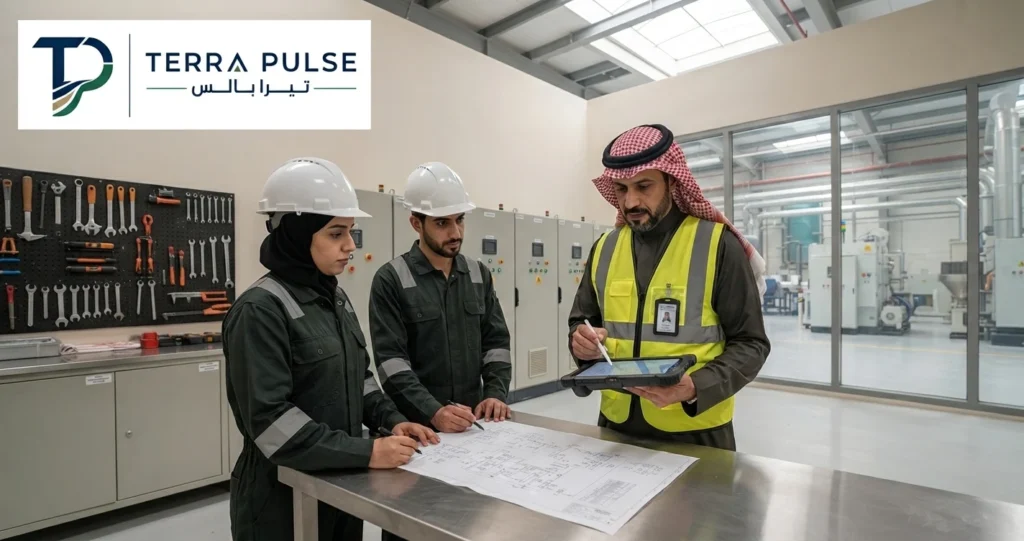
Technician site readiness means verifying that a person’s qualifications, experience and practical ability suit the assigned tasks, then providing site induction, work resources and clearly authorised boundaries. The outcome should be a record showing what the technician may do, what requires supervision and what has not yet been authorised.
This guide helps project managers, supervisors and operations teams organise technician qualification checks and site onboarding. It includes a readiness checklist, tracking examples and a practical workflow. Adapt these tools to the task, contract, facility and applicable requirements; they do not issue a professional licence or permission to undertake specialist work.
What Does Technician Readiness Before Starting Work Mean?
Match competence to the task and facility conditions
Readiness is a verification and preparation process linked to an actual role at a particular site. It combines professional evidence, assessment of task performance, understanding of site procedures, and the resources and permissions required for the assignment. The process may identify additional training needed before certain activities can be authorised.
Start with a practical question: what will the technician do, on which asset, using which instructions and under whose responsibility? The title “maintenance technician” does not explain whether the role involves recording observations, preventive servicing, fault diagnosis or changing operating settings.
HSE’s guidance on competence explains the relationship between knowledge, training, experience and the ability to apply them to a task. It is a useful professional reference for assessment, while applicable Saudi requirements and facility procedures govern the local assignment.
Approve readiness for a defined task or a suitable group of related tasks. Reading an equipment record successfully does not establish repair competence. Experience gained at another facility also needs to be matched to the current equipment, environment and authority boundaries.
How Do Qualification Checks Differ from Site Induction?
Review professional evidence and explain facility procedures
Qualification checks establish whether the professional background and training are relevant to the task. Site induction explains how the person will work within the facility, including access, communication and reporting. Practical assessment supplies evidence of performance between those stages.
| Stage | Question it answers | Required output |
|---|---|---|
| Qualification and experience checks | Is the evidence relevant, and has its status been verified? | A documented review of certificates, experience and applicable professional requirements. |
| Practical assessment | Can the person perform the defined task acceptably under suitable assessment conditions? | A result linked to criteria, observations and recorded gaps. |
| Site induction | Does the person understand locations, hazards, procedures, supervision and reporting? | An induction record and a check of understanding in an appropriate language. |
| Authorisation to start | Which activities are permitted now, with what supervision or restrictions? | A decision by the authorised person defining the scope and review arrangements. |
Some preparation can take place in parallel, but one stage should not be treated as evidence that another is complete. An access badge concerns entry under the facility’s arrangements. Task permits and technical authorisations follow their own applicable processes.
How Do You Turn a Job Description into a Task List?
Define systems, equipment and intervention limits
Convert the broad title into activities and outputs that can be assessed. State the asset or system, type of work, technical reference, decision boundaries and information to be recorded. Distinguish observation, inspection, diagnosis, repair and changes to settings.
| General description | Reviewable task | Boundaries to define |
|---|---|---|
| Monitor air-conditioning equipment | Match the unit identifier to the work order and record permitted observations and readings using the facility form. | Activities involving equipment opening, isolation or setting changes, and who approves intervention. |
| Support the pump team | Identify the asset, retrieve its instructions, record an observation and refer it to the supervisor within the approved role. | Authority for starting, stopping, mechanical work and electrical work. |
| Document maintenance work | Attach the required information and evidence to the correct asset and submit the work for review. | Who reviews the result and may approve closure or change asset data. |
These examples explain how to define a role; they do not authorise the activities. Review each task with the system owner and relevant supervisor, particularly where disciplines overlap or the work affects service continuity.
When discussing skilled technical manpower supply for companies and projects, provide the tasks, equipment, shifts and specific requirements. This lets the parties consider suitability against the actual role rather than a title alone.
How Should You Check a Technician’s Certificates?
Check relevance, validity and verification evidence
Match the holder’s name and relevant details, discipline, issuing organisation, programme type, issue date and validity status where an expiry applies. Distinguish an academic qualification, course-attendance certificate, assessment result and professional accreditation.
Record the verification method, source, date and result. A clear copy or scannable code is not sufficient if it does not lead to a trustworthy record for that certificate. Where verification is incomplete, retain a “pending verification” status and a follow-up owner rather than accepting the document automatically.
Where professional registration or skill-verification requirements apply, check the responsible body and the applicant’s status. The Saudi National Portal lists registration for technical grades through the Saudi Council of Engineers, while the professional skill-examination platform provides relevant examination and enquiry services. Applicability depends on the occupation and circumstances; these are not a universal mandatory checklist for every technician.
Also review contractual or manufacturer requirements for specialist systems. Completing any required professional accreditation remains one part of verification, followed by matching the person’s ability to the equipment and site procedures.
How Do You Define Relevant Experience for Each Task?
Consider equipment, complexity and the operating environment
Do not rely on years of service alone. Ask which equipment the technician has worked on, which activities they personally performed, their actual responsibility, how recently they practised and the level of supervision they needed.
Use professional examples that can be explained: how did they connect an observation to the right asset, which instruction did they consult, how did they verify the result, and when did they refer a decision to someone else? Request examples that protect previous clients’ confidential information and verify professional references through the permitted process.
The environment also changes the experience needed. Occupied premises, shifts, restricted areas and continuous production may introduce additional coordination, access and documentation requirements even when the equipment type is familiar.
Set suitability criteria before reviewing candidates. Identify what can be addressed through familiarisation and what requires specialist training and assessed practice. Avoid imposing an arbitrary experience threshold on every role without a task-related basis.
How Should You Review a Practical Assessment?
Assess performance, documentation and training gaps
A competent specialist should design the assessment around the task in a suitable controlled environment, using simulation or training equipment where needed. A hazardous situation on an operating system should not be used to test someone whose authority and competence have not been established.
Define the task, criteria and assessor beforehand, then record what was observed and the assistance provided. A correct answer following repeated prompts is different from independent performance within authorised boundaries.
| Assessment area | Evidence to look for | What to record |
|---|---|---|
| Understanding the assignment | Identifying the required result, asset, boundaries and missing information. | Correct understanding and points needing clarification. |
| Using technical information | Consulting the appropriate instruction and revision. | The reference used and difficulties interpreting it. |
| Recognising hazards and authority | Identifying prerequisites, intervention limits and when to stop or escalate. | Any gap preventing the task or requiring reassessment. |
| Task performance | Following the approved technical criteria within the assessment environment. | Observations, independence and assistance provided. |
| Documentation and communication | Recording the result against the asset and explaining unresolved matters. | A completed form or specific observations on record quality. |
A good aggregate score must not hide failure against a safety prerequisite or mandatory authorisation. The result should identify the task assessed, each critical criterion, the corrective training and any reassessment needed.
What Should Be Checked Before Site Entry?
Confirm approvals, documents and access arrangements
Coordinate with the personnel, contract and security functions to complete applicable entry requirements. These may include identity and assignment checks, necessary approvals, arrival arrangements, reception points, transport, clothing and equipment permitted on site.
Relevant legal, contractual and occupational-fitness requirements should be reviewed by the appropriate specialists. The task manager generally needs the relevant clearance status or approved restriction. Avoid collecting medical files or identity-document copies in a widely circulated operational register without a defined need.
Distinguish a visit for assessment or induction from attendance to perform work. Record whether access is escorted or area-specific, who receives the technician and what happens if the entry requirements cannot be completed.
A delayed badge is an access issue; an incomplete competency check is a readiness issue. Keep the two visible so work is not assigned simply because the technician has reached the premises.
How Do You Organise a Site Induction?
Explain locations, access and communication contacts
Make induction specific to the facility and role. Explain area boundaries, pedestrian and vehicle routes, essential facilities, communication channels, emergencies, the direct supervisor and how tasks are received and handed over.
Use a suitable walkthrough of permitted areas or approved maps and images where access is unavailable. Explain restricted zones, escort rules, photography, devices and materials, and how workers will know when site instructions change.
Use a language the technician understands and explain important terminology and symbols. Translated materials or suitable interpretation may be needed. A signature on an Arabic or English form does not by itself demonstrate understanding.
HSE’s site-induction guidance is a practical reference for structuring topics and communication. Adapt it to the Saudi facility and its procedures; British legal duties should not be presented as local requirements.
What Information Does the Technician Need Before Starting?
Provide drawings, instructions and relevant operating records
Prepare information linked to the task: the work order, asset identifier and location, approved instructions, relevant drawings, known operating condition and earlier faults or work affecting the assignment.
Explain where to find the controlled version and how to recognise superseded information. If a drawing differs from the site or the asset cannot be identified, the discrepancy should be recorded and referred before intervention. Similar appearance alone is not reliable identification.
Define the expected result, verification criteria and reviewer. “Check the unit” does not explain what should be observed or recorded and can create different expectations between the technician and supervisor.
Where the tasks form part of ongoing operations and maintenance, asset information, requests and work records can be organised within an agreed facility management and maintenance scope, with clear responsibility for updating and approving the data.
How Do You Check Understanding of Safety Procedures?
Verify reporting, escalation and task-specific preparation
Ask the technician to explain, in their own words, what must happen before the task, the limits of their role, whom to contact when uncertain and how to report a hazard or emergency. Use suitable hypothetical situations and record what needs further explanation.
The Saudi Ministry of Human Resources and Social Development’s workplace-risk guidance addresses informing workers about occupational hazards, providing appropriate protective equipment and training them to use it, and communicating instructions in a language they understand where needed. Preparation should therefore reflect the task and actual understanding rather than attendance alone.
- Does the person know when site procedures require a permit or specialist coordination?
- Can they distinguish entry permission, technical assignment and the applicable task permit?
- Can they identify the reporting contact, escalation route and backup communication method?
- Do they understand the site’s response to changed conditions or an unexpected hazard?
Activities requiring specialist competence or authorisation, including relevant electrical, lifting or confined-space work, follow their own requirements. General induction does not authorise them, and supervision alone does not replace a missing mandatory prerequisite.
How Do You Check Tools and Personal Protective Equipment?
Confirm suitability, condition and supply responsibilities
Identify the tools, measuring devices and protective equipment required by the task assessment and instructions, then check availability, suitability and condition. Review verification or calibration status where applicable, relevant accessories and the technician’s ability to use the supplied equipment.
State who provides and checks each item, where it is stored and how unsuitable equipment is replaced. Contractual supply arrangements need to be clear without displacing the employer’s applicable worker-protection duties.
Record relevant issue, defect and replacement information. Receiving a tool bag does not establish suitability for every task, and having PPE does not authorise work with other unmet prerequisites. Where an essential resource is missing, hold the affected task until the applicable requirement is satisfied.
How Should Access to Records and Systems Be Assigned?
Match permissions to the task and identify the reviewer
Define what the technician needs to read, enter or change. Access to work orders differs from authority to approve their closure. Viewing a control-system value differs from permission to change a setting. A role may also be limited to a site or asset group.
Use an authorised individual account where the system supports it and record who approves and reviews access. Do not share a supervisor’s account or password to bypass delayed provisioning. The responsible function may approve a suitable temporary recording method that does not extend execution authority.
Check access to the necessary information before the first shift and explain rules for photographs, attachments and personal devices. Update or revoke unnecessary permissions when the assignment ends or the role changes, retaining operational records under the facility’s arrangements.
What Should the Direct Supervisor Be Responsible For?
Monitor performance and provide a clear point of support
Name the supervisor, deputy and contact methods before work starts. Define the initial assignment review, activities requiring direct attendance, hold points for review and the arrangements when the supervisor is unavailable.
| Party | Review area | Record needed |
|---|---|---|
| Personnel and contract function | Documents, assignment arrangements and applicable administrative requirements. | Clearance status, outstanding items and information-sharing boundaries. |
| Competent technical assessor | Experience and practical suitability for the tasks. | Assessment criteria, results and gaps. |
| Site and safety functions under the project structure | Induction, access, safety procedures and coordination. | Induction, understanding checks and remaining requirements. |
| Direct supervisor | Task assignment, execution, documentation and restrictions. | The assignment, supervision, communication and result reviews. |
| Authorised approving person | The start-work decision under the project’s delegation matrix. | Permitted scope, decision date and reassessment conditions. |
Responsibilities may be shared between the manpower supplier, client, main contractor and system owners. The written arrangement should identify who supplies the evidence, who approves the result and how conflicting assignments are prevented.
How Should Readiness Gaps Be Addressed?
Use targeted training, appropriate supervision or reassignment
Classify the gap by its consequences. It may concern the reporting route, an equipment skill, mandatory professional status, a permit or a missing tool. The response differs; a supervisor’s presence does not make every gap acceptable.
Record the action, owner, due date and reassessment criteria. Targeted training should address a defined issue, such as entering a result in the correct form, followed by a check of performance. Missing mandatory prerequisites prevent the affected task until they are satisfied.
Illustrative example: an experienced air-conditioning technician has not yet learned the new facility’s asset codes and intervention-request process. Provide focused familiarisation and a safe work-order exercise with supervisor follow-up. Record the activities permitted once their prerequisites are complete; familiarisation does not add permission to change settings or perform unapproved tasks.
If a gap concerns an essential technical ability, defer the task or assign it to a suitable person while arranging training and assessment. Respond to programme pressure through an approved adjustment to the work allocation rather than concealing a restriction.
How Do You Organise the First Shift?
Hand over tasks, communication arrangements and work orders
Start with a clear supervisor briefing covering permitted activities, work areas, equipment condition, simultaneous work, communication and the required documents. Assign work matching demonstrated readiness and provide review points appropriate to its consequences.
Before execution, the technician should review the work order, asset identifier, reference and prerequisites. Keep support available during the shift, particularly when conditions change or information falls outside the instructions.
At the end of the shift, review completed and incomplete work, reasons for non-completion, open observations and their handover to the next shift. A task should not be marked complete simply because the shift ended or the technician attended.
The duration of familiarisation and supervised shifts depends on the work and observed results. There is no single period in which every technician can be assumed to reach readiness.
How Should Approval to Start Work Be Documented?
Link the checklist to evidence and authorised approval
The project’s authorised decision-maker should review the relevant evidence before approving the assignment. Identify the task or asset scope, location, restrictions, supervisor and decision reference, together with the conditions requiring reassessment.
| Review item | Verification question | Suitable evidence |
|---|---|---|
| Task | Are the scope and intervention limits clear? | An approved task list or assignment description. |
| Qualifications | Have relevant documents been verified? | A verification record and document references. |
| Professional requirements | Are applicable requirements satisfied? | Required accreditation or examination status with its verification source. |
| Experience and assessment | Is suitability supported by evidence? | Experience review and practical assessment results. |
| Entry | Are access permissions and boundaries complete? | Approval reference and any escort conditions. |
| Induction | Were site procedures explained in an appropriate language? | Induction content, attendance and understanding checks. |
| Safety | Does the technician understand task prerequisites, escalation and emergencies? | Relevant training or understanding-verification record. |
| Tools and PPE | Are suitable resources available and in acceptable condition? | Preparation, inspection and issue records as needed. |
| Information | Are current work orders and asset instructions available? | Controlled document references. |
| Digital permissions | Is the required access limited and approved? | Provisioning approval and access check. |
| Supervision | Are the supervisor, deputy and review points defined? | An assignment, communication and supervision plan. |
| Gaps | Have prerequisites preventing the task been resolved? | Completion actions and reassessment results. |
| First shift | Are the initial work and handover arrangements understood? | An initial assignment and end-of-shift review. |
| Decision | Has the authorised person approved the scope and restrictions? | A dated decision with a defined scope and review reference. |
Use explicit statuses such as “verified”, “pending completion”, “not satisfied” and “not applicable with reason”. Record the final decision as, for example, “authorised for the defined task”, “authorised within an approved supervised scope” or “not currently authorised”. Mandatory and safety requirements continue to govern the decision.
A high completion percentage does not compensate for a blocking prerequisite. Reassess readiness before extending the assignment if the task, equipment, permissions or status of a relevant document changes.
How Should Performance Be Followed Up After Work Starts?
Review execution, record quality and support needs
Review the work actually assigned: compliance with scope, use of instructions, execution quality, complete information and appropriate escalation. Combine supervisor observations with a suitable sample of work-order records.
Useful indicators include work returned for a documented shortcoming, open training gaps and completeness of required fields in the records reviewed. Define the reason for rework and the sample size before using the information to assess a technician.
More reported issues or requests for help do not automatically indicate poor performance. They may reflect better observation or respect for authority boundaries. Review the quality of reporting and the appropriateness of the response rather than rewarding low reporting volumes.
Choose follow-up intervals according to risk and the work involved. Reassess when equipment or roles change, or a significant performance observation arises. The readiness record should evolve with evidence from actual work.
How Do You Check a Replacement Technician’s Readiness?
Transfer knowledge and update team records
A replacement needs their own checks. A colleague’s approval or the supplier’s existing arrangement does not transfer automatically. Review tasks, qualifications, experience, induction and permissions, then record readiness before assigning shift coverage.
Provide a handover covering important assets, open work, operating restrictions, contacts and the location of instructions. Arrange suitable overlap when the work calls for it, without assuming that every replacement requires an identical period.
If the replacement has not met the required conditions, reorganise coverage through the approved plan. Do not leave them alone in a role requiring competence or authority they do not possess. Update team records, permissions and assignments for absences, replacements and the end of an assignment.
How Do You Build a Technician Readiness Register?
Connect technician details, training, tasks and start-work status
Create a master register linking each technician to the task, site and supporting evidence, with detailed records for gaps and assessments. Use an internal identifier where appropriate rather than displaying complete identity information in a widely shared dashboard.
| Technician ID | Defined task | Gap or restriction | Start-work status |
|---|---|---|---|
| T01 | Record observations for specified assets using the approved form. | The requirements and understanding checks for this assignment are complete. | Authorised within the approved scope; repairs and setting changes are excluded. |
| T02 | A specialist task requiring a specified authorisation. | Verification of the mandatory prerequisite remains incomplete. | Not authorised for the task until completion and approval. |
| T03 | Practise work-order documentation in a training environment. | Assessed practice is needed before independent documentation is approved. | Supervised training within an approved scope; no additional operating authority. |
The working register should include the identifier, assigning organisation, discipline, task and site, verification references, assessment result, induction and training, resources and permissions, supervisor, gaps, decision, decision date, approving person and reassessment triggers. Keep sensitive details with the authorised functions and reference them where necessary.
Steps for Applying the Readiness Checklist Before Work Starts
- Define tasks and intervention limits. Link each assignment to the equipment or system, site, reference and required supervision.
- Verify qualifications and applicable prerequisites. Record verification sources, document status and any outstanding professional or administrative conditions.
- Assess experience and practical ability. Use suitable criteria, a competent assessor and a safe assessment environment, recording gaps and results.
- Provide site induction and check understanding. Explain areas, instructions, safety and communication in an appropriate language, with suitable examples or exercises.
- Prepare resources, information and permissions. Check tools, PPE, work orders, instructions and authorised access to records.
- Resolve gaps and appoint the supervisor. Complete blocking prerequisites, reassess where needed and record supervision boundaries and communication arrangements.
- Approve the defined start-work decision. The authorised person records the scope, restrictions, evidence and review date or reassessment triggers.
- Review the first shift and update the register. Verify the assignment, documentation and handover of open work, then adjust training or scope through the approved process.
The register can be maintained in a spreadsheet or workforce and work-order system if updates, access and versions are controlled. Its value is in tracing decisions to evidence and using that information when assigning or replacing personnel.
Frequently Asked Questions About Technician Site Readiness
The following answers cover qualifications, training, approval, supervision, replacements and performance follow-up.
What should I check before allowing a technician to start work?
Review the task and intervention limits, qualifications and applicable prerequisites, experience and practical assessment, site induction, safety understanding, tools, information and permissions. Confirm that blocking gaps are resolved, a supervisor is named and the authorised person has approved the defined assignment.
Is a certificate enough to establish readiness?
A certificate is part of the evidence and should be checked for type, relevance and status. Readiness also requires suitable experience and practical ability, understanding of facility procedures, and the prerequisites, resources and permissions needed for the defined task.
How do I check experience with the facility equipment?
Identify the required equipment and activities, then review what the technician actually performed, their independence and how recently they practised. Add an appropriate specialist assessment, consult equipment instructions and record gaps rather than relying only on years of experience.
Who approves the technician readiness checklist?
The person authorised under the project structure and delegation matrix approves the assignment after the relevant specialist reviews. Evidence may come from personnel, technical assessment, site, safety and supervision functions. One signature should not be assumed to cover every requirement.
What should site induction include?
Cover permitted and restricted areas, movement routes, facility rules, supervisors and contacts, reporting and emergencies, task receipt and handover, and role-specific information. Use an appropriate language, check understanding and record the content and result.
How should we handle a technician who needs more training?
Identify the gap, its impact and the affected task, then arrange targeted training, assessed practice or reassignment. Do not authorise the task while mandatory or safety prerequisites are missing. Define the evidence needed for reassessment and subsequent approval.
How do we check a replacement technician is ready?
Verify the replacement individually for the task and site, then update team records and permissions. Hand over assets, open work, restrictions and contacts, and arrange suitable overlap where needed. The previous technician’s approval does not transfer automatically.
What should we review after the first shift?
Review work within scope, documentation quality, appropriate support requests and escalation, and how open work was handed over. Record training or organisational actions and change the assignment through a documented decision where needed.
Does an access badge or induction attendance authorise all work?
An access badge concerns site entry, while induction attendance records participation in preparation and any understanding checks completed. Task execution needs relevant competence, authority, prerequisites and permits where applicable. Neither provides unrestricted permission for every activity.
Can a technician start under supervision while a gap remains?
A suitable supervised or training scope can be approved where the task and applicable requirements allow it, with defined limits and verification. A missing mandatory or safety prerequisite still prevents the affected task; a supervisor’s presence alone does not replace it.
How long does technician preparation before site work take?
It depends on the activities, experience, available evidence, site requirements and identified gaps. The decision should follow completion of the prerequisites and verification of ability and understanding, rather than a fixed number of days or the end of an induction session.
When should technician readiness be reassessed?
Reassess when the task, equipment, site, procedures or permissions change, when the status of a relevant prerequisite changes, or when performance observations justify it. Record the review, restrictions, training and updated decision in the readiness register.
Apply the checklist to each assignment and record what is complete, what remains outstanding and who holds the decision authority. Review readiness when the work changes or a replacement arrives, preserving the applicable safety and professional prerequisites.
For a project or facility workforce requirement, review Terra Pulse’s skilled technical manpower supply service, contact the team or share the tasks, site and shift requirements on WhatsApp to discuss preparation and supervision responsibilities within the agreement.
Official Sources and Professional References
These references support competency verification, induction and training principles. The British sources provide professional guidance on organisation and assessment; binding Saudi requirements must be checked with the competent bodies for the occupation, contract and site. The examples are organisational tools and do not represent approval by the referenced organisations.
- Saudi Ministry of Human Resources and Social Development: Workplace Preparation and Protection from Hazards and Accidents.
- Saudi National Portal: Registration for Technical Grades through the Saudi Council of Engineers.
- Professional Skill-Examination Platform and Related Enquiry Services.
- HSE: Competence and Its Relationship to the Task and Workplace.
- HSE: Site Rules and Induction.
- HSE: Contractor Competence, Coordination and Supervision.
- HSE: Information, Instruction, Training and Supervision.
