

 Terra Pulse Technical Team
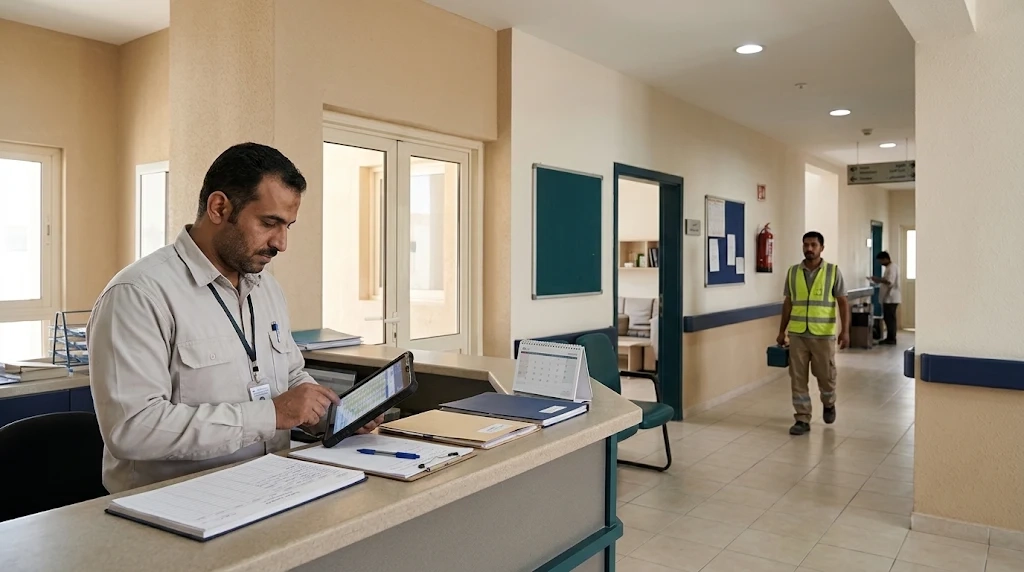
The guide is for HR teams, facilities managers and accommodation supervisors, whether the company runs the site directly or appoints an operator. The work depends on the premises, agreed scope and applicable requirements. Terra Pulse worker accommodation setup and management services.
What is worker accommodation management?
Coordinating occupancy, services and daily follow-up
Worker accommodation management covers resident allocation, room readiness, cleaning, maintenance, resident requests and complaints, and records of the actions and outcomes. The scope depends on which duties the company handles and which it assigns to the operator or suppliers.
Start each day with a register of current residents, incoming groups, reservations and places out of service. The supervisor reviews inspection findings and open requests with the team, then assigns an owner and follow-up date to each action.
- Reception updates room and bed status after arrivals, departures and moves.
- Service teams record completed work and findings that need attention.
- The supervisor links each request to its location, effect on residents and verification result.
- The operations report shows figures, recurring issues and decisions needed.
When a room goes out of service, update the allocation register and link the closure to the maintenance order. Once work is complete, record the inspection before making the room available again.
What is the difference between providing a building and running accommodation?
Initial readiness and ongoing responsibilities
Providing the building means making the premises or units available and handing them over in the agreed condition. Worker accommodation operations cover the ongoing work after handover, such as reception, occupancy updates, inspections, cleaning and fault follow-up. One party may provide both, or the owner, company and operator may share the responsibilities.
| Stage | What to check | What to record |
|---|---|---|
| Building provision | Agreed units, condition, documents and included furniture | Handover record, inventory and outstanding findings |
| Accommodation operations | Room readiness, services and the work of staff and suppliers | Occupancy register, work orders and inspection reports |
| Work outside the operator’s scope | Who will do the work and who can approve the cost | Referral, due date and impact of delay |
Before taking over, agree who will remedy existing defects, who will respond to faults that arise in use, and when work needs another party’s approval. Worker accommodation contract checklist.
How do you define the accommodation management scope?
Included and excluded services, and hours of coverage
Describe the buildings, units, resident numbers and operating hours. For each service, define the areas covered, frequency, reporting process and responsibility for materials and spare parts. Identify when the operator coordinates a supplier and when it must carry out and verify the work.
- Occupancy and reception. Arrival times, room allocation, internal moves and key management.
- Daily services. Cleaning of included areas, inspections, and follow-up on utilities and requests.
- Maintenance. Permitted inspections and repairs, spending authority and referrals for specialist work.
- Coverage. Hours on site, contact arrangements outside those hours and the urgent escalation process.
- Additional services. Catering, transport, pest control and purchasing where included.
Turn broad commitments into tasks that can be checked. For air conditioning, specify what the team inspects, who logs faults, who repairs them and who clears the room for use. Approve scope changes before adding them to the work schedule.
How do you allocate responsibilities across the operations team?
Supervision, reception, cleaning, maintenance and follow-up
Assign an owner and a deputy to each task, and identify who approves decisions beyond their authority. One person may cover several roles on a small site. Record responsibilities so residents and staff know whom to contact.
- Accommodation supervisor. Checks occupancy and readiness, prioritises requests and refers decisions to the company.
- Reception. Reconciles arrivals and departures and updates room allocations, keys and issued items.
- Cleaning team. Performs scheduled work and reports findings requiring maintenance or supervision.
- Maintenance team. Assesses faults, records repairs and test results, and refers specialist work.
- Company representative. Confirms changes to numbers and dates and approves matters within the company’s scope.
Hand the next shift a short list of expected arrivals, urgent requests, closed rooms and pending decisions. Include the location, owner, last action and next review date so the new shift can continue the work from the existing record.
How do you manage resident arrivals and departures?
Registration, room allocation, issued items and status updates
Before arrival, match the incoming list to ready rooms and confirmed allocations. Verify the expected numbers and check-in time. Prepare a working list linking each resident to a building, room and place, and have keys, issued items and house instructions ready. If a room will be late, verify the alternative before confirming the allocation.
- On arrival. Verify the details needed for registration, record check-in time and convert the reservation to occupied.
- At room handover. Record issued items and their condition, and explain service contacts and house rules.
- When a resident moves. Close the former allocation and open the new one as a single dated movement.
- On departure. Confirm the departure, collect issued items and inspect and record the condition of the place.
A place may require cleaning or repair after departure. Update its status immediately and keep resident details and issue records in a restricted register. Share aggregate unit figures with teams that need counts only.
How do you track rooms and available beds?
Occupied, vacant, reserved and unavailable places
Accommodation occupancy management starts with consistent room and bed identifiers and a current status for each place. For a shared room, check individual beds alongside room readiness and the condition of the services it uses. A room can be partly occupied while other places are reserved or unavailable.
| Status | What it means for allocations |
|---|---|
| Occupied | Has an active allocation, including during a temporary absence if the place is held |
| Reserved | Assigned to a future arrival for a specified date |
| Vacant and ready | Available after checking suitability and the applicable limits |
| Unavailable | Closed for maintenance, cleaning or a readiness inspection |
Check approved capacity and totals before confirming allocations. When a room closes, take the affected places out of availability and review any active or future allocations for alternatives. Reopen it after a documented check. Worker accommodation requirements in Saudi Arabia.
How do you set and communicate house rules?
Clear instructions residents can understand and use
In workforce housing management, house rules explain how residents use facilities, contact the supervisor and take care of shared spaces and issued items. Write instructions in clear language and provide translations or an explanation where needed. Introduce them at check-in and make them available in shared areas.
- Explain quiet hours and how to use kitchens, laundry facilities and common areas.
- Explain how to keep keys and issued items secure and report loss or damage.
- Identify contact routes for routine requests, complaints and emergencies.
- Show how to dispose of waste and keep corridors and exits clear.
- Explain departure procedures and how to report a room change or revised return date.
Update the instructions when services or contact routes change and keep a dated version. When the same issue recurs, check whether the instructions are clear and practical for residents before applying the agreed procedure.
How do you plan daily and periodic cleaning?
Assigning tasks by area and level of use
Divide the site into cleaning areas such as entrances, corridors, toilets, shared facilities and any rooms covered by the scope. Set task frequencies from occupancy, use and peak periods. Shared toilets may need additional checks when groups arrive or shifts overlap.
- Daily tasks. Schedule cleaning, waste collection, restocking and checks of frequently used surfaces.
- Periodic tasks. Plan work requiring more time or equipment, such as deep cleaning of included facilities.
- Occupancy changes. Inspect places after departures and record completed cleaning before making them available.
- Verification. Inspect a sample of completed work and record results and corrective actions.
Link each task to an area, shift, owner and acceptance criterion. When a finding recurs in one location, check the frequency, resources and condition of the fixture or surface before changing the schedule. Log the outcome and set a date to verify the change.
How do you monitor water, electricity and air conditioning?
Site rounds, findings and service continuity
Use site rounds to identify interrupted or degraded services and determine how residents are affected. Map rooms to their shared facilities and systems. This helps the team see whether a report concerns one fixture or several rooms supplied by the same system.
- Water and drainage. Record weak supply, leaks or repeated slow drainage and identify affected areas.
- Electricity. Record outages or recurring trips and refer technical assessment and repairs to qualified personnel.
- Air conditioning and ventilation. Track recurring complaints by place and time, and record service condition after the work.
- Service continuity. Communicate planned outages to residents and set a verification time and arrangements for delays.
If an outage affects whether a room can be used, update the occupancy register and tell the allocation team. The relevant specialist determines the isolation, repair or restoration procedure for the situation.
How do you manage preventive and corrective maintenance?
Inspection schedules, work orders and repair priorities
Build preventive maintenance around an asset register, with tasks and frequencies based on equipment type, manufacturer instructions and site condition. Corrective maintenance starts with a fault report or an inspection finding. Link both records so recurring faults can inform the inspection programme.
- Assign asset identifiers and record location and responsibility for maintenance.
- Record inspections due, completed or deferred, with a reason and new date for deferrals.
- Prioritise faults by safety impact, service disruption and number of residents affected.
- Identify who approves parts or additional work and record what is awaiting approval.
- Verify service restoration and record work, parts and test results.
If the same asset fails again, link the new request to its history and review the cause with the technician. Use condition and fault history to assess whether to repair it again or request a replacement.
How do you receive resident requests and complaints?
Accessible channels, registration, classification and follow-up
Choose channels residents know and can use, such as reception, a dedicated number or an online form. Bring requests from all channels into one register. Explain coverage hours, how residents can follow up using a reference number and how to contact the emergency response team directly.
- Record the receipt time, building, room or facility, description and reported impact.
- Distinguish service requests, fault reports and complaints requiring review or escalation.
- Link reports about the same fault to one work order while retaining the individual requests.
- Assign a follow-up owner, set the next update time and explain how the resident can check progress.
- Restrict access to records containing personal details or sensitive complaints.
Three rooms may report the same water outage. Open one work order for the shared fault and link all three requests to it. Check that water has returned to every affected room and update each resident.
How do you manage a request through to closure?
Assignment, action, verification and resident updates
The supervisor tracks the request from receipt until the service is restored or the complaint is addressed. Use statuses such as new, assigned, in progress, awaiting supplier, awaiting approval and verified. Record the owner, last update and due date for the next action at each stage.
- Log the request with its location, receipt time and reported impact.
- Set the priority based on impact and escalate emergencies under the site plan.
- Assign the work order and record the owner and follow-up date.
- Document the inspection and action, and record the reason for any delay.
- Verify the outcome and record the service restoration check or complaint resolution.
- Notify the resident and close the request. Reopen it if the issue persists.
Illustrative example. A resident in room 204 reports weak air conditioning. Reception logs the request, the supervisor assesses its impact and sets its priority, and the technician inspects the unit and records the test result. The supervisor verifies that the service has returned and updates the resident. If the fault recurs, link it to the earlier record when investigating the cause.
How do you coordinate catering and transport when they are in scope?
Schedules, contacts and service quality
Meal counts and transport seats change with arrivals, departures and shift patterns. Where catering or transport is part of worker accommodation management, give the supplier a current plan stating what is required, where and when. The contract should identify who coordinates the supplier, checks delivery and follows up on complaints.
- Catering. Check quantities, delivery times and distribution points. Record shortages, delays and quality concerns under the site procedure.
- Transport. Match schedules to shifts, pickup points and available seats on each trip.
- Changes. Agree the order cut-off and how to send urgent changes and confirm receipt.
- Follow-up. Identify a contact at the company, operator and supplier, and record the impact of delays and the agreed alternative.
When a group is added, confirm rooms before updating the associated services. If reserved and occupied numbers differ, use the agreed ordering or billing basis for each service and retain the figures used.
How do you organise waste management and pest control?
Prevention, collection, records and corrective action
Identify where waste is generated, how it is collected and where it is held temporarily. Keep corridors and emergency exits clear. Set collection frequency from use, then monitor container fill levels and the surrounding condition. Pay particular attention to kitchens, dining areas and places where water or waste collects.
- Set collection points and times, and assign responsibility for cleaning and removal within the scope.
- Check for food residue, leaks and entry points that could contribute to pest activity.
- Record sightings by location and date and refer treatment to the relevant provider under the agreed procedure.
- Follow up on the visit, check preventive actions and inspect the area after treatment.
If sightings recur, review waste routes, doors, drainage and service times before closing the issue. Check cleaning records, work orders and supplier notes together to identify the action that still needs attention.
How do you manage safety and emergency readiness?
Inspections, training, escalation and current contact details
Use a site plan that identifies response roles, escalation routes and instructions for residents. Saudi Arabia’s Ministry of Municipalities and Housing emphasises usable evacuation routes and exits, readiness of alarm and firefighting systems, and familiarising residents with emergency procedures. Check the requirements that apply to the premises. Ministry guidance on safety in collective accommodation (Arabic).
- Check during rounds that evacuation routes and exits are clear.
- Review system inspection records and maintenance dates with the relevant specialist.
- Keep contact numbers, escalation roles and assembly points up to date and explain them to residents.
- Coordinate training and drills under the site plan and record outcomes and actions.
In an immediate emergency, follow the emergency plan and contact the response authority identified in it. Complete the incident record after taking the response measures. Official health, technical and safety requirements for collective accommodation (Arabic).
How do you manage assets, stock and purchasing?
Issued items, consumption, replacements and supply
Keep distinct records for assets that stay on site, such as furniture or an air conditioning unit, items issued to residents or staff, and consumables that need replenishing. Link assets to location, condition and maintenance history. Track issued items through handover and return records. Review stock using actual consumption and expected supplier lead times.
- Record receipts, issues, the recipient and remaining stock.
- Set reorder points using consumption and expected lead times.
- Link issued spare parts to work orders and record unused items returned to stock.
- Record the reason for repair or replacement, asset condition and approval request, then verify receipt.
Count stock at intervals suited to the site and investigate differences. When the operator changes, reconcile issued items, keys and assets with the handover record. Identify stock on order or items that belong to an outside supplier.
What belongs in an accommodation operations report?
Occupancy, services, requests, risks and actions
Start the monthly accommodation operations report with the site name, reporting period and data cut-off. Show occupancy, service condition and work orders, then explain variations and decisions needed. Distinguish month-end figures from activities recorded throughout the period so the reader can compare months on a consistent basis.
| Area | What to report | Follow-up |
|---|---|---|
| Occupancy | Occupied, ready, reserved and unavailable places, plus expected arrivals | Check capacity, alternatives and readiness dates |
| Services | Cleaning results, inspections, preventive maintenance and included services | Address shortcomings and assign verification |
| Requests | Opening backlog, new requests, closures, closing backlog and age of overdue items | Escalate outstanding items and explain delays |
| Risks and actions | Material findings, incidents and decisions required | Give each action an owner, due date and verification method |
Illustrative reconciliation. The month starts with 8 open requests. The team logs 24 new requests and closes 26 after verification. The closing backlog is 6, assuming no requests were reopened or withdrawn. The report explains why those six remain open and identifies decisions needed before the next month.
Which indicators help assess accommodation operator performance?
Response, maintenance, cleaning, occupancy and complaints
Choose indicators that reflect the operator’s scope and agreed time targets. Define the source, period and calculation for each. Track first response separately from restoration time, and apply the agreed rules for time spent waiting for suppliers or approval.
| Indicator | How to measure it |
|---|---|
| On-time response | Requests meeting the response target divided by requests due for measurement in the period, by priority |
| Preventive maintenance | Due tasks completed on time divided by all tasks due in the period |
| Cleaning quality | Inspections meeting the standard divided by inspections completed, with coverage and recurring findings reported |
| Occupancy | Residents with active allocations divided by ready capacity on a stated date, with approved capacity and reservations reported |
| Repeat complaints and faults | Recurring cases by location and subject, alongside action taken on the causes |
Multiply ratios by 100 to express them as percentages. For example, an on-time response to 18 of 20 eligible requests is 90% under the agreed measurement rules. If no cases qualify, mark the indicator as unavailable for that period. Read the percentage alongside the number of cases and any quality findings.
How do you take over accommodation from a previous operator?
Records, issued items and outstanding issues
Set the time responsibility transfers and carry out a joint inspection where the agreement allows it. Reconcile residents and ready or unavailable rooms with site conditions, then record discrepancies before approving the handover. Review supplier commitments and upcoming arrivals so service continues through the change.
- Occupancy. Check active allocations, reservations and arrival and departure dates.
- Assets and access. Reconcile keys, access devices, equipment and stock, and record the condition of received items.
- Records. Transfer inspection, maintenance and operating documents using defined access permissions.
- Open work. Review unresolved requests, urgent findings, supplier appointments and pending decisions.
- Communication. Tell residents and relevant teams the new contact routes, responsible person and time coverage starts.
List outstanding handover items with an owner and verification date. After the change, check actual occupancy and the first round of service inspections against the transferred records.
Frequently asked questions about worker accommodation management
Responsibilities, operations, reports and service follow-up
What does worker accommodation management include?
It includes room allocation, arrivals and departures, readiness checks, cleaning, maintenance, service follow-up, request and complaint records, and reporting. It can also include coordinating catering, transport and suppliers where the agreement covers them.
How do the owner’s and operator’s responsibilities differ?
The contract and applicable documents define the responsibilities. The owner’s role generally relates to providing the property and meeting obligations concerning it. The operator handles the assigned daily work. Identify who arranges repairs, approves work and pays for each item, especially outside the operating scope.
How do you track residents and available rooms?
Use a register linking each resident to a room, bed and allocation status, and update it on arrival, departure and transfer. Separate occupied, reserved, ready and unavailable places. Check capacity and service readiness before assigning a place.
What is a practical way to organise maintenance requests?
Use one register with a reference, location, priority, owner and follow-up date for each request. Record the action and verification result and tell the resident when it closes. Link multiple reports about the same fault to a shared work order.
What should a monthly accommodation operations report include?
Include the period, occupancy and room readiness, cleaning, maintenance and other service results, new and closed requests and the remaining backlog, risks and decisions needed. Assign an owner and due date to each open action.
How do you measure cleaning quality in worker accommodation?
Inspect a sample of areas using a checklist and defined acceptance criteria. Record the outcome, findings and reinspection date. Read the pass rate alongside inspection coverage and repeated findings in the same areas.
Can worker accommodation be managed using a digital system?
Yes. A digital register or platform can connect rooms, occupancy, work orders and reporting, with permissions and an update history. Define who records and verifies data and how requests received outside the system will be logged.
What should you check when changing accommodation operators?
Check rooms, residents and bookings, assets, stock, keys, maintenance and inspection records, outstanding requests and supplier commitments. The handover record should state when responsibility transfers, which items remain outstanding and who will follow them up.
