

 Terra Pulse Technical Team
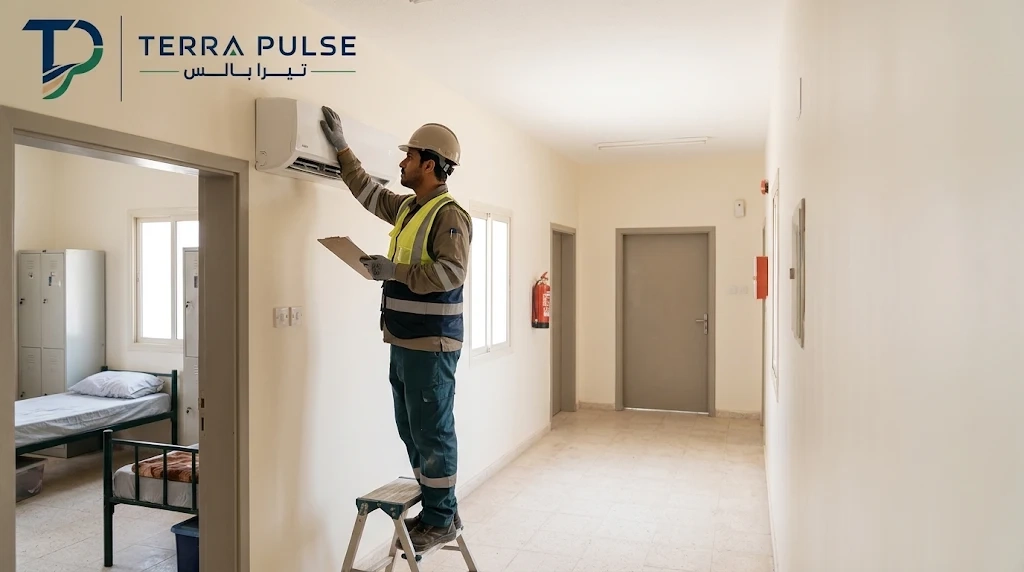
This guide is for site managers and accommodation supervisors in Saudi Arabia who are responsible for occupied buildings. It includes a preventive inspection schedule, a fault priority matrix and a worked example of how to document a repair. If residents have yet to move in, start with the worker accommodation setup checklist and use the handover record as the starting point for your maintenance register.
What should a worker accommodation maintenance plan include?
A worker accommodation maintenance plan should include an asset register, a preventive inspection schedule, a fault priority matrix, a process for assigning work orders and a method for testing and documenting repairs. It should also identify who is responsible at each step, how essential services will continue if critical equipment fails and when work must be referred to a qualified technician or specialist.
In group housing, the impact of a breakdown depends on how many people use the affected service and when they need it. One washing machine out of service may have little impact if other machines are available. Losing the entire laundry room is a different problem. A maintenance window that works for the day shift may also disturb residents returning from a night shift. Record both the service impact and the timing of the work.
How do you build an asset register and identify critical equipment?
Walk the site building by building, then floor by floor. Compare installed equipment with handover records and available drawings, and record its starting condition. Include air conditioning and ventilation, electrical panels and lighting, pumps and water storage, plumbing and drainage, kitchen and laundry equipment, doors and furniture, and the safety systems within the operating scope.
- Identification: Asset ID, location, type, model, serial number where available and the area served.
- Maintenance: Condition, manufacturer documentation, warranty, last inspection, next inspection, responsible person and supplier or specialist.
- Impact of failure: Does it affect safety or an essential service? How many areas depend on it? Is a backup available, and how long would it take to restore service or obtain a replacement part?
For example, give a shared water pump one asset ID and link it to every building it serves. If several buildings report low pressure at the same time, the supervisor can direct the first checks to the shared supply. If only one washbasin is affected, the investigation can start there. Treat both observations as clues until an inspection confirms the cause.
Copyable asset register row: Asset ID | Building and floor | Area served | Condition | Criticality | Backup | Responsible person | Inspection reference | Next due date.
How do you set a preventive maintenance schedule for worker housing?
Preventive maintenance is scheduled before a breakdown, such as inspecting air conditioning equipment and cleaning components in line with the manufacturer’s instructions. Corrective maintenance addresses an existing fault, such as repairing a leaking connection. If a preventive inspection reveals a fault, create a linked corrective work order with an owner and a follow-up date.
Set each task’s frequency using applicable requirements, the manufacturer’s instructions, the asset’s condition, how heavily it is used and its fault history. Choose a time that suits occupancy and shift patterns, assign the work and specify what will show it was completed. Review air conditioning tasks before peak summer demand and revise the schedule when occupancy changes or faults start to recur. Assign specialist testing to appropriately qualified providers.
Sample preventive inspection schedule for occupied accommodation
These frequencies are planning examples. Adjust them to the site and equipment, and keep mandatory inspections on their applicable schedule.
| Asset or area | What to check | Example timing | Owner and record |
|---|---|---|---|
| Air conditioning and ventilation | Look for weak cooling, reduced airflow or unusual condensation. The technician checks filters, condensate drainage and equipment performance as appropriate. | Weekly operating walkthrough as an example; service according to the manufacturer’s instructions, with a review before peak demand. | The supervisor records symptoms; the technician logs findings, readings and work performed. |
| Electrical systems and lighting | Look for damaged switches or sockets, failed lights and reports of repeated breaker trips. A qualified specialist checks circuits and loads when required. | Scheduled common-area walkthroughs; escalate signs of a hazard immediately. | The supervisor records the location and impact; the specialist documents findings and repairs. |
| Water supply and pumps | Review low-pressure complaints, visible leaks, pump operating status and unusual readings or indications. | Daily review of available operating indicators as an example; technical servicing according to equipment requirements. | The supervisor logs affected areas; the technician records readings and actions. |
| Drainage and washrooms | Look for slow drains, backflow and leaks. Note whether the problem is at one fixture or affects several facilities. | Daily walkthrough of heavily used facilities as an example; review repeat reports. | The supervisor records observations; the plumbing technician documents the cause and drainage test result. |
| Kitchens and laundries | Look for damaged equipment, leaking connections, poor ventilation or drainage problems. Track faults by equipment ID. | Observe during use; service according to the manual and equipment usage. | The area lead reports faults; the supplier or technician records functional test results. |
| Safety systems and emergency exits | Look for blocked routes or damaged doors and track specialist inspections of safety systems. | Scheduled site walkthroughs and formal inspections as applicable. | The supervisor logs observations; the qualified provider records tests and corrective actions. |
| Doors, furniture and common areas | Check for faulty locks, unstable bed frames or damaged furniture edges. Take unsafe items out of use. | During walkthroughs and room turnover; escalate any safety issue. | The supervisor updates the inventory and links repairs or replacements to the asset record. |
A supervisor’s walkthrough is for spotting and reporting problems early. Opening electrical panels, disabling alarms and carrying out specialist tests fall outside that role unless the person is qualified and authorised. Check Balady’s health and technical requirements for group housing for applicable local requirements. For general maintenance planning, see the U.S. Department of Energy’s Facility Energy Checklist for aligning HVAC schedules with occupancy, and the Saudi National Asset and Facilities Management Manual on electrical maintenance in residential facilities for coordinating shutdowns, using manufacturer instructions and accounting for seasonal conditions.
How do you classify accommodation faults and set response priorities?
When a report comes in, ask four questions: Is anyone in immediate danger? Which areas and how many residents are affected? Has an essential service stopped? Is there a safe alternative? Use the answers to assign a priority and reassess it if the impact spreads or the backup fails.
| Priority | Examples | First action |
|---|---|---|
| Emergency: immediate danger | Smoke, a suspected electrical hazard in a wet area or another immediate threat to residents. | Activate the site emergency plan and notify the designated responders. Keep people away from the affected area if it is safe to do so. Logging the report must not delay the response. |
| Urgent: essential service disrupted | A building loses water, air conditioning fails in an occupied wing during extreme heat, or several washrooms go out of service. | Escalate to the duty supervisor, confirm the affected area and activate the approved alternative if available. Move to the emergency procedure if there is immediate danger. |
| Scheduled: limited impact | One washing machine fails while others are available, or a locker is damaged without creating a hazard. | Schedule the work, arrange access and confirm completion. Reassess if a hazard develops or the alternative is no longer available. |
Set three separate targets in the service level agreement: acknowledging the report, starting the response and restoring service. Record the final repair time separately if a temporary measure restored service first. Set targets according to the contract, coverage hours, site location and access to technicians and spare parts.
How should you handle resident reports and verify repairs?
Give residents an easy way to report faults, such as a duty supervisor’s number or a simple form, with clear instructions for emergencies outside regular hours. Explain the reporting process in languages residents understand and confirm receipt. Keep reports in one place and record the reference number, time, building, floor, room, asset ID if known, symptoms, impact and access details. Collect only the contact information needed to respond. The IFC and EBRD guide to workers’ accommodation discusses ongoing maintenance, communication with residents and grievance procedures.
- Triage: Confirm the location and impact and assign a priority. When several reports trace back to one shared asset, link them to a single work order while retaining each report’s details.
- Assign: Identify the technician or supplier, set a response time and record any access, safety, resident notification or backup arrangements.
- Record the work: Note the confirmed cause, the action taken, parts used and relevant readings. If the cause is still unknown, say so and schedule further investigation.
- Test and close: Test the affected function under suitable operating conditions. Record the result, who verified it and when service returned. Update the resident where appropriate.
- Reopen or link: If the same symptom returns, reopen the work order or link the new ticket to it so the next technician can review the previous attempts and readings.
Worked example: A recurring leak near the laundry
A resident reports water in the corridor beside the laundry. The supervisor restricts access to the wet area and calls the technician. The technician traces the leak to a connection that leaks when one washing machine drains, repairs it and runs a test cycle. After checking the connection and corridor during the drain stage, the team records when the area was reopened. The work order contains the machine ID, leak location, repair and test result. If water appears again, the next technician has a record to compare against.
What counts as proof that service is back? For air conditioning, record the relevant performance test in the affected area against the operating reference. For a water supply fault, verify that flow has returned at the affected outlets. For electrical and safety systems, attach the qualified specialist’s test record. A photo can show that a part was replaced; the test result shows whether the equipment works.
Across multiple buildings or shifts, digital facility monitoring can help link assets with work orders, readings and outstanding actions.
Who owns each task, and what should be ready before a breakdown?
Name the person who receives the report, the person who carries out the repair, the person who approves the expense and the person who verifies the result. The operator may handle the initial response while another party approves replacement or submits a warranty claim. Use the worker accommodation contract checklist to review who covers repairs, parts and after-hours support. Turn the agreed responsibilities into an escalation list the duty team can use.
- Spare parts: Prioritise stock by the impact of equipment failure, supply lead time and part compatibility. Set a reorder point and name an owner.
- Suppliers: Record each supplier’s scope, after-hours contact details, warranty terms, expected attendance and backup contact if they cannot respond.
- Service continuity: Decide who can activate an approved backup, provide access to an alternative facility or reassign rooms within approved occupancy limits.
- Resident coordination: Give advance notice of planned work, service interruptions and alternatives. Work around shifts where possible, arrange room access, protect privacy and update residents if the scope or timing changes.
For budgeting, separate preventive inspections, corrective work, after-hours coverage, spare parts and major replacements. When comparing quotes, ask which labour, parts and specialist inspections are included and which will be charged separately.
How do you track maintenance performance and recurring faults?
Review critical and overdue work weekly, and look at trends monthly. When comparing buildings, use the same reporting rules and account for differences in occupancy and asset count.
- On-time preventive maintenance: Divide the tasks due and completed on time by all tasks due in the period, then multiply by 100. Keep deferred tasks visible with a reason.
- Response and restoration times: Track time from report to start of response, and from report to service restoration, by priority. Review unusually long cases alongside the average.
- Recurring faults: Track the same symptom on the same asset within an agreed review period. Separate recurring faults from duplicate reports of one incident.
- Overdue work order age: Show how many days each order is overdue, what is blocking it and who owns the next action, such as obtaining a part or arranging access.
If several fixtures on the same drainage run repeatedly block, compare where and when the faults occur and what previous visits found. Check whether each visit simply restored flow or investigated the underlying cause. If the issue persists, arrange a wider inspection or compare repair with replacement based on asset age, repeat downtime, parts availability and the effect on residents.
Checklist for approving the maintenance plan
- Critical assets are listed, linked to the areas they serve and checked for faults that were open when operations began.
- Each recurring task has an owner, due date, inspection reference and completion record.
- Residents know how to report faults, and supervisors know who to contact during and outside working hours.
- Approved alternatives exist for essential service failures, with clear authority to activate them.
- Work orders can be traced from report to service restoration, including specialist test records and unresolved issues.
- The team has tested the reporting and escalation process with a scenario such as a water outage outside regular hours.
Frequently asked questions about worker accommodation maintenance
What does a worker accommodation maintenance plan cover?
It covers asset records, preventive work, fault priorities, reporting and escalation, responsibilities, repair verification, backup arrangements and performance measures.
How often should preventive maintenance be carried out?
Start with applicable requirements and manufacturer instructions. Adjust the schedule for asset condition, intensity of use, fault history and seasonal demand. Review it when occupancy changes or faults recur.
Which accommodation faults require an urgent response?
Urgent faults interrupt an essential service for residents, such as a building-wide water outage or a cooling failure in an occupied wing during extreme heat. If there is immediate danger, activate the site’s emergency procedure.
How should residents report maintenance issues?
Provide a published reporting channel and an after-hours emergency procedure. Log a reference number, location, time and impact, then track the report through assignment and repair verification. If a temporary solution is used, keep the permanent repair on a linked record.
Who is responsible for maintaining worker accommodation?
The contract and service scope define the responsibilities of the owner, operator and tenant. The site plan should identify who receives reports, performs repairs, approves costs and verifies that service is restored, including after hours.
How should recurring faults be investigated?
Link reports to the asset ID and compare symptoms, operating conditions, previous work and test results. Assign a check for the underlying cause and monitor the asset during an agreed follow-up period.
What should be recorded before closing a maintenance work order?
Record the work order and asset IDs, the action taken, any parts used, the time service was restored, the functional test result and who verified it. If a backup restored service, track the permanent repair separately.
What determines the cost of maintaining worker accommodation?
Cost depends on asset count and condition, occupancy, location, inspection frequency, coverage hours, specialist work, parts availability and the repairs and replacements included in the contract.
Putting the maintenance plan into practice
Start with the equipment whose failure could put residents at risk or interrupt an essential service. List those assets, check for overdue inspections and agree with the duty team on how to escalate faults and verify that service is back. After the first operating cycle, use repeat failures and the oldest open work orders to adjust the schedule and set spending priorities.
Need a maintenance plan for an occupied site? Discuss your maintenance scope with Terra Pulse. Share the number of buildings and residents, the services most prone to disruption and the coverage you need. You can also explore Terra Pulse’s worker accommodation operations and maintenance services.
