

 Terra Pulse Technical Team
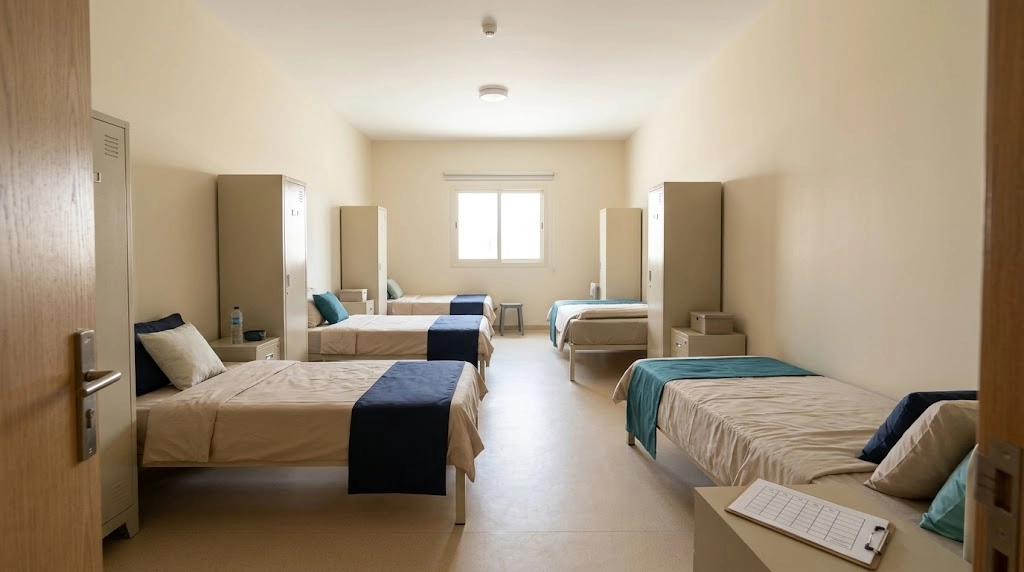
The guide starts with the documents that apply to the premises and then explains how to manage day-to-day allocations across rooms and companies. Terra Pulse worker accommodation setup and management services.
What does worker accommodation capacity mean?
The permitted number of residents for the premises
Worker accommodation capacity is the maximum number of residents the premises can house under the applicable documents and requirements. Before confirming an arrival, check that limit against the condition of rooms and shared facilities, current occupancy and existing reservations. The number of places available for allocation can change during the week while the approved limit stays the same.
Review capacity before increasing occupancy in six steps.
- Verify the approved capacity document and its scope.
- Match the rooms and facilities to the documents and actual site conditions.
- Exclude unavailable places and check the effect of shared service faults.
- Update actual occupancy and confirmed reservations.
- Calculate allocatable places at room, unit and building level.
- Approve the allocation or arrange alternatives before the group arrives.
Use the result for the planned arrival date. Repeat the review if occupancy, room status or the arrival schedule changes after the table is prepared.
How do estimated capacity, approved capacity and actual occupancy differ?
Planning assumptions, documented limits and current numbers
Each figure answers a different question. Procurement may need an initial estimate when assessing a property. The accommodation team needs a documented limit and a record of who is allocated to each room. Separating these figures helps the team check what it can commit to before signing a contract or confirming an arrival.
| Figure | Meaning | Use |
|---|---|---|
| Estimated capacity | A preliminary figure based on available information and assumptions | Assessing options before verification |
| Approved capacity | The permitted limit within the scope of the applicable document | Checking proposed allocations |
| Actual occupancy | Residents with active accommodation allocations at the time of review | Identifying places already assigned |
| Available to allocate | Ready places suitable for the incoming group and free of existing allocations and reservations | Deciding how many people can be accommodated |
Record a date and source for each figure. If a resident is temporarily away and retains a place, keep that allocation active. The register will then reflect commitments and expected returns even when the number of people physically present changes throughout the day.
What information do you need to review capacity?
Rooms, floor areas, facilities, units and documents
Start the worker accommodation capacity review by identifying the building and matching each room and unit to the documentation and the actual layout. Use identifiers that agree across room doors, drawings and the occupancy register. Record wings and floors so the team can identify the extent of a closure or a shared service fault.
- Documents. Collect the licence or approvals, drawings and records relevant to capacity. Record their dates and scope.
- Rooms. Record dimensions, the area eligible for the applicable calculation, use and current furniture layout.
- Facilities. List toilets, washing facilities, kitchens and shared services, along with their condition and the rooms they serve.
- Allocations. Record current residents, reservations and arrival and departure dates by unit and company where relevant.
Distinguish measured data from drawings and unverified information. If an operating record conflicts with a capacity document, log the discrepancy and assign someone to resolve it. Base allocations on limits verified for the premises.
How do you identify the requirements that apply to capacity?
Location, accommodation type, responsible authority and current requirements
Identify the property address, type, use and issuing authority, then check which current requirements apply to those premises. Saudi Arabia’s Ministry of Municipalities and Housing publishes health, technical and safety requirements for collective accommodation. The relevant authorities provide services for checking requirements and reviewing licence details as applicable.
- Match the document to the address, building or unit identifier and intended use.
- Check the current edition and the requirements for the location and type of accommodation.
- Check room and facility limits and any building-wide cap. Ask the relevant authority to clarify uncertain calculations.
- Keep the document and its version, the review date and the record used for the allocation decision.
Where a company rents a unit, the operator may need to review its documents alongside the building’s documentation. Confirm with the responsible authority which procedure applies. Official collective accommodation requirements (Arabic) · Balady collective accommodation services (Arabic).
How do you check bedroom floor area?
Documented measurements and the area eligible for the calculation
Measure each bedroom and compare it with the drawing for its current layout. Calculate a rectangular room from its length and width. Divide irregular shapes into measurable sections. Then determine which areas count under the applicable requirements. A building’s total floor area may include corridors, shared facilities and service spaces that serve different purposes in the assessment.
Where the applicable requirements specify a floor area per person, dividing the eligible bedroom area by that figure gives an estimate based on area alone. Round down to a whole person. Check any separate room limit, facility requirement and building cap before determining the permitted number of occupants.
Keep a measured plan for each room and record alterations that affect its use. If measured areas differ from the documentation, arrange a technical review before changing allocations. Evaluate room size using the requirements applicable to the premises and the verified property information.
How does furniture layout affect a room’s usability?
Circulation, access and storage within the permitted capacity
Inspect bedrooms after furnishing. Bed and locker positions can change how easily people move through a room even when floor area stays the same. Check whether residents can reach each bed and their belongings, open doors and lockers, and follow a clear route from the furthest bed to the door. Assess the room in normal use, with luggage and everyday belongings in place.
- Match bed positions and quantities to the planned allocation.
- Check that furniture and belongings keep routes, doors and exits clear.
- Check access for service, cleaning and maintenance.
- Record rooms that need rearrangement before they can be allocated.
A room may temporarily accommodate fewer people while its layout is corrected. Once the furniture has been rearranged, check readiness again and use the documented room limit when returning it to service. Worker accommodation setup checklist.
How do toilets and washing facilities affect capacity?
Working fixtures, access and the residents they serve
Bedrooms can be ready while toilets or washing facilities limit the number of residents the operator can serve. Check working fixtures, their locations and the rooms or wings that depend on them. Review the relevant requirements for provision and distribution, and verify water supply, drainage and access during normal use.
- List working and unavailable fixtures and record their locations.
- Map each facility to the rooms or wings it actually serves.
- Check the requirements for each type of fixture and accommodation arrangement.
- Assess the effect of a temporary closure before allocating additional residents.
If fixtures serving a wing become unavailable, verify whether a suitable alternative can serve those residents within the permitted arrangements. The operator may need to restore the service or revise allocations temporarily. Record the decision, who approved it and when the affected facilities will be checked again after repair.
How does building services readiness affect available places?
Cooling, water, drainage and service outages
Readiness determines whether documented capacity can be used on a given day. Review air conditioning, ventilation, water, drainage, power and relevant safety systems. A fault can affect several rooms when they share a water line, cooling unit or essential facility.
- Mark the fault on the plan and identify the rooms and facilities it affects.
- Distinguish rooms that need a small verifiable repair from rooms that depend on the restoration of an essential service or specialist assessment.
- Update unit and building availability to prevent allocations in affected rooms.
- Inspect the affected rooms and record the result before returning them to service.
Confirm readiness through inspection after the service returns. A maintenance completion date is a planning input. Where a fault poses a risk to residents, manage the response and any relocation under the site’s safety plan and the relevant specialist’s direction.
How do you calculate availability when rooms close for maintenance?
Removing unavailable places and updating allocations
Update the room status when it closes and exclude places that have become unavailable. Review the effect of the fault on shared facilities and the number of residents the building can serve. If the affected room is occupied, account for the transfer of its residents to verified alternatives and update the receiving room before calculating availability for arrivals.
Calculation for each unit. Start with ready capacity after exclusions. Subtract places occupied and confirmed unoccupied reservations that overlap the incoming group’s stay. Check the result against remaining building capacity and suitability for the group. Resolve any shortfall or allocation conflict before assigning more people.
Count each unavailable place once, even if two faults affect the same room. Record the reason, start time, owner and reopening condition for each closure. A move record should show that the former allocation was closed and the new one was created once.
How do you manage occupancy across several companies?
Unit allocation, resident counts and responsibilities
When several companies share one accommodation site, use a central register that links each place to a company, unit and period. Review the building limit and shared facilities across all allocations, even when each company keeps its own list. Check unit limits and documents covering the rental arrangement where applicable.
- Operator. Maintains room status and availability and reviews overall occupancy and shared constraints.
- Company representative. Supplies arrival and departure lists, updates dates and confirms allocations within the company’s units.
- Reception team. Matches the number of arrivals and their actual rooms to the plan, then updates the central register.
Agree how to reserve and release places and who approves moves between units. Before transferring a place assigned to another company, check whether it can be reallocated and whether existing reservations are affected. Worker accommodation contract checklist · Official collective accommodation proof certificate service (Arabic).
How do you track actual occupancy?
Arrivals, departures, room moves and reliable records
Use a register that shows each resident’s allocated place, allocation status and last update. Give each person a consistent internal identifier and date each arrival, departure and move. Count residents from active allocations and reconcile differences with room checks and company records.
- Arrival. Confirm the allocated place and convert the reservation to occupied at check-in.
- Departure. Close the allocation once the resident has left and the place has been released. Check readiness before making it available.
- Internal move. Close the former allocation and open the new one as one recorded move.
- Temporary absence. Record the person’s status, whether the place is being held and the expected return date.
Issue an updated count after a group arrives or a move affects availability. Restrict access to resident details and share aggregate counts where sufficient. Check for duplicate allocations and clear reservations once they become occupied, so each place is counted once.
How do work shifts affect accommodation planning?
Planning rest and shared services within approved capacity
Shifts affect sleep, return times, transport and demand for shared facilities. Review these operational needs alongside the approved limit. A worker who is on duty remains allocated a place if it is being held for them. Shift overlaps, days off or delays can bring several groups back to the accommodation at the same time.
- Check departures, returns and overlapping shifts, including non-working days.
- Allocate rooms with rest, cleaning and shared use in mind.
- Plan meals, transport and laundry around demand at different times.
- Count places using active allocations and the applicable room, unit and building limits.
Test the plan against a day when shifts overlap or a transport service is delayed. If the proposed allocation depends on one group leaving before another can use its places, reassess the allocation and alternatives. Use shifts to plan services and the accommodation documents to check permitted occupancy.
How do you plan for workforce growth during a project?
Forecast dates, check availability and arrange alternatives
Turn the workforce plan into a weekly or monthly occupancy forecast. Record the opening number of residents, expected arrivals, confirmed departures and any peak when groups overlap. Compare each period with the ready capacity expected on those dates. Include reservations and works that could take rooms out of service.
- Record arrival dates, group sizes, companies and any requirements affecting allocation.
- Separate confirmed dates from estimates and set a review date for the forecast.
- Test what happens if a departure is delayed or maintenance overruns on an arrival day.
- Arrange suitable alternative accommodation with verified capacity and readiness, or agree a revised arrival schedule.
If a room will reopen later than planned, calculate what the ready rooms can take and assign the remaining people to confirmed alternatives. Where residents move to another site, review transport, catering and supervision arrangements alongside the allocation.
Which changes require a review of capacity records?
Changes to rooms, floor area, facilities or documents
Review worker accommodation capacity when an alteration affects bedrooms, eligible area, use, shared facilities or the scope of a document. Examples include combining rooms, converting a space into a bedroom, reallocating units rented to several companies, or changing a facility residents rely on.
- Identify what changed and record the affected rooms and facilities on an updated plan.
- Review the effect on allocations, service readiness and safety with the relevant specialist.
- Ask the responsible authority whether documents need to be reviewed or amended.
- Update capacity records and room allocations once readiness is verified and any applicable procedures are complete.
Record temporary room closures in the occupancy register as changes in availability. Assess a change in layout or use separately when it affects approved documentation. Balady collective accommodation licence amendment service (Arabic).
What are the risks of relying on the bed count alone?
Furniture inventory and the permitted number of residents
A bed count records the furniture available for sleeping. The permitted number of residents comes from the applicable accommodation documents and requirements. A bed can be in a closed room or positioned where it obstructs access. An empty bed can also belong to an absent resident or be reserved for another arrival.
- Match the furniture inventory to room layouts and verified room limits.
- Classify each place as occupied, reserved, ready or out of service.
- Check how extra furniture affects movement, access and service provision.
- Review any planned increase against the building limit and facilities shared by several rooms.
Before buying additional furniture, confirm what the approved accommodation plan requires. Inspect the installed layout and room condition before adding places to the register. Check the remaining building and unit capacity again before accepting new bookings.
How do you build an occupancy register that can be checked?
Units, approved capacity, occupancy, unavailable places and the balance
Use one row per room or unit, with a way to trace individual places. Record the capacity reference, review date and responsible person. Report totals at wing and building level so shared service constraints and any building cap remain visible after the room rows are added up.
| Field | What to record |
|---|---|
| Location | Building, wing, unit, room and company where applicable |
| Capacity reference and limit | Applicable document, scope, date and permitted number |
| Out of service and ready | Unavailable places and why they are closed, followed by ready capacity after checking shared constraints |
| Occupied and reserved | Active allocations and confirmed unoccupied reservations for the relevant period |
| Available for arrivals | Places that can be allocated after checking rooms, limits and dates |
| Last review | Update date, owner and reference to any finding or action |
After adding the rows, check totals against shared constraints and review duplicate records and overlapping reservations. Show any shortfall and its cause. Use an aggregate summary when sharing allocation results with people who need counts only.
Worked example of occupancy allocation in an existing building
Using assumed documented limits for an operational calculation
The figures are illustrative. Assume a building has a documented limit of 60 residents across three wings. An unoccupied room with four places in Wing B closes for maintenance. Assume that shared facilities remain ready, no additional constraints apply and confirmed reservations overlap the incoming group’s stay.
| Wing | Documented limit | Out of service | Ready capacity | Occupied | Reserved and unoccupied | Available to allocate |
|---|---|---|---|---|---|---|
| A | 24 | 0 | 24 | 21 | 1 | 2 |
| B | 20 | 4 | 16 | 14 | 0 | 2 |
| C | 16 | 0 | 16 | 12 | 2 | 2 |
| Total | 60 | 4 | 56 | 47 | 3 | 6 |
There are 56 ready places. After accounting for the 47 occupied places, nine remain physically unoccupied. Three are reserved, leaving six available for the new group if the room allocations are suitable. For a group of eight, the operator can assign two places in each wing and arrange verified alternatives or agree revised arrival dates for the remaining two people.
After six people check in, occupancy rises to 53 and the three reservations remain in place. Recalculate if reservations change or the closed room passes inspection and returns to service.
What should you check before a new group arrives?
Headcount, rooms, readiness and documents
Review the allocation before confirming the arrival date and update it when information changes. The reception team should know each person’s assigned place, and alternatives should be arranged before the group travels. Keep a dated copy of the reviewed register.
- Confirm headcount, arrival date and the company responsible for the group.
- Match the capacity documents and their scope to the proposed rooms and units.
- Check furniture, water, air conditioning, drainage and the shared facilities the group will use.
- Resolve conflicts involving closed rooms, existing reservations or unconfirmed departures.
- Review the number of occupants per room and unit and the total for the building.
- Confirm ready alternatives or a revised arrival date for anyone without an allocation.
- Give reception the allocation plan and update actual occupancy at check-in.
If room status changes on arrival day, suspend that allocation and check the effect on the rest of the plan. Record and communicate moves or alternatives, then reconcile the final register with actual room allocations.
Frequently asked questions about worker accommodation capacity
Floor area, room occupancy, facilities and additional arrivals
How do I check the approved capacity of worker accommodation?
Review the licence or approved document covering the building or unit. Match the address, scope and details to the premises. If the limit or its application to individual rooms is unclear, ask the responsible authority and review supporting records before allocating places.
How much bedroom floor area does each worker need?
Check the current requirements that apply to the location and type of accommodation. Determine the bedroom area eligible for the calculation, apply the prescribed method and check the documented limits and other constraints for the site.
How do you determine the number of occupants per room?
Review eligible floor area, applicable room limits, furniture layout and circulation. Match the result to the documented limits for the rooms, unit and building, then confirm actual room readiness before allocation.
Can an outage in toilets or washing facilities reduce availability?
Yes, if it affects services required by the rooms or wings that depend on those facilities. Identify the fixtures and residents affected, check any ready alternative and update availability. Recheck the facilities after service is restored.
How do I calculate availability after a room closes for maintenance?
Exclude unavailable places and account for shared service restrictions and resident moves. Subtract occupied places and confirmed reservations that overlap the arrival period from ready capacity. Check the remaining building limit and suitability of the available rooms for the incoming group.
Do different shifts or extra beds allow more residents?
Work shifts help plan rest and services, and additional beds change the furniture inventory. Any increase in occupancy must be checked against approved capacity, room and facility limits, actual readiness and any procedures that apply to changes.
What should I do if an incoming group exceeds availability?
Confirm how many places can be allocated on the arrival date. Arrange suitable alternative accommodation with verified documentation, capacity and readiness for the remaining people, or agree a revised arrival schedule. Update transport, room assignments and reception arrangements.
When should capacity be reviewed after changing rooms or facilities?
Review capacity before using the new arrangement if it changes eligible floor area, room use, facility provision or document scope. Check any required procedure with the responsible authority and record the outcome in the occupancy plan.
