

 Terra Pulse Technical Team
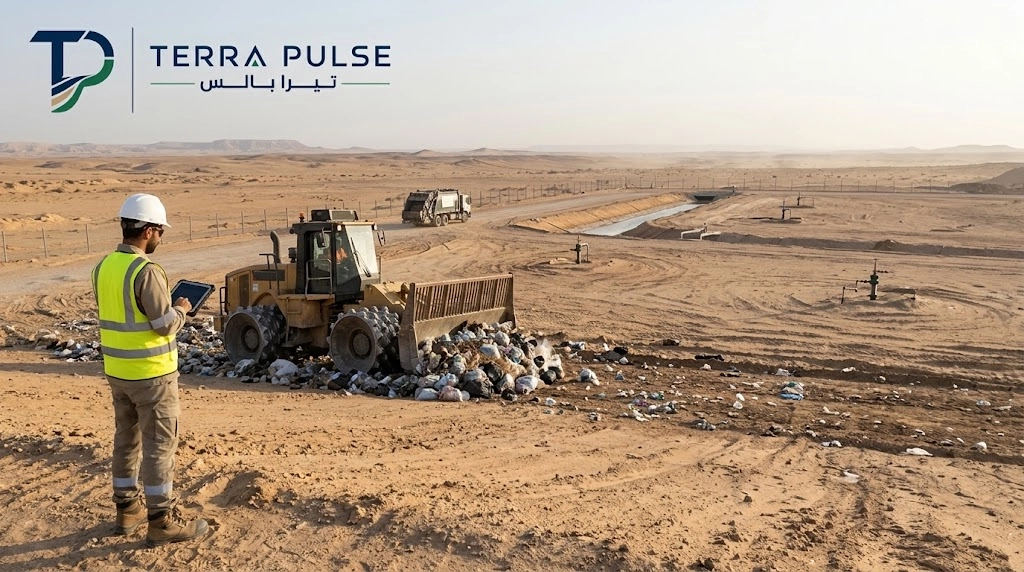
Engineered landfill operations begin before the first waste vehicle reaches the gate. A facility needs clear procedures defining which waste it can accept, how loads are checked and recorded, where vehicles discharge and how disposal cells, water, leachate and landfill gas are managed. These arrangements become increasingly important as incoming quantities, weather conditions, equipment availability and remaining capacity change.
Effective landfill management is measured by more than vehicle turnaround time. Operators must accept only suitable waste, protect engineered infrastructure, manage environmental impacts and maintain records that support reliable decisions. A non-conforming load, failed pump or blocked drain can create consequences extending beyond the activity in which the problem first appeared.
This guide explains the main stages of engineered landfill operations in Saudi Arabia, from reviewing documents and organising waste reception to environmental monitoring, closure and aftercare. To discuss a facility-specific scope, explore Terra Pulse’s waste and landfill management services and relate the requirement to the waste types, design, permits and actual site conditions.
1. What Are Engineered Landfill Operations?
Managing waste reception, disposal and environmental controls within the facility’s scope
Engineered landfill operations involve the day-to-day management of permitted waste reception, inspection, weighing and placement in designated cells, followed by spreading, compaction and covering, together with environmental controls, monitoring, maintenance and emergency arrangements. The work also includes recording loads, cell conditions, leachate, gas observations and corrective actions.
The operating scope depends on the landfill classification, accepted waste, development stage and approved design. Procedures should therefore be reviewed before being transferred between sites. A facility receiving inert waste may have different requirements from one accepting biodegradable waste, while operating a new cell differs from maintaining a completed disposal area.
A practical operating system connects each field decision with the procedure governing it. It should establish who can accept a load, authorise a working area, respond to a pump alarm or suspend an activity when an unsafe condition appears.
2. How Does an Engineered Landfill Differ from an Uncontrolled Dumpsite?
Design, waste acceptance, operation, monitoring and documentation
An engineered landfill is designed and operated using controls appropriate to the waste, location and identified risks. Depending on the facility, these may include containment and leachate collection systems, surface-water management, gas and water monitoring, and arrangements for closure and aftercare. The required details depend on the site design and applicable requirements.
| Comparison | Engineered landfill | Uncontrolled dumpsite |
|---|---|---|
| Waste acceptance | Defined waste types, acceptance criteria and documented checks. | Waste may arrive without a reliable assessment of suitability. |
| Disposal areas | Planned cells, operating phases, boundaries and levels. | Unorganised placement that may be difficult to trace. |
| Environmental controls | Infrastructure and procedures matched to site assessment and design. | Limited or absent controls and follow-up. |
| Records and closure | Documented quantities, locations, activities and aftercare planning. | Incomplete information that can complicate future assessment and remediation. |
A perimeter fence or earthmoving equipment alone does not establish that a site is an engineered landfill. Infrastructure condition, waste acceptance procedures, operating practices and monitoring need to be assessed together.
3. Which Documents Should Be Reviewed Before Operations Begin?
Design information, permits, operating plans and accepted waste types
The initial review should confirm that current documents cover the actual activity and the areas intended for use. Waste management activity licences and environmental permits have different scopes and conditions; neither should automatically be assumed to cover every other obligation.
- Current licences and permits, including their conditions and scope.
- Approved drawings, relevant as-built information and handover records.
- The operating plan, cell development sequence and internal access arrangements.
- The list of permitted waste types and applicable acceptance criteria.
- Leachate, gas, water, environmental monitoring and emergency management plans.
- Maintenance, closure and aftercare plans, together with required records.
Differences between drawings and actual conditions should be documented and reviewed before the affected area enters service. Environmental management plan preparation can help connect controls, monitoring and responsibilities within a clear follow-up framework, while the necessary licences and approvals remain separate requirements.
4. How Should Responsibilities Be Assigned Within the Operating Team?
Reception, weighing, operations, maintenance, safety and monitoring
Landfill management needs a written allocation of daily duties, decision-making authority and escalation arrangements. One person may perform several roles at a smaller facility, but responsibility for each task should remain clear, particularly during shift changes or staff absences.
Reception personnel check vehicle and load information, weighbridge staff record weights and movements, and the operating supervisor directs vehicles to the appropriate area. Maintenance personnel manage equipment condition and defects, while safety and environmental monitoring duties are assigned to competent people within a defined scope.
The arrangements should identify who can stop unloading, approve the response to a non-conformity, review monitoring results and coordinate notifications where required. Shift handovers should cover cell conditions, equipment availability, alarms and outstanding actions so that information remains available to the next team.
5. How Is Vehicle Movement Organised Within the Site?
Routes, speeds, manoeuvring and separation of work areas
The traffic management plan should reflect the site layout, vehicle types, tipping areas and movement of heavy plant. Its purpose is to reduce conflicts between trucks, pedestrians and spreading or compaction equipment while maintaining access to infrastructure and emergency routes.
- Define routes for entry, weighing, waiting, unloading and exit.
- Set clear instructions for speed, priority and manoeuvring according to site conditions.
- Reduce reversing and vehicle crossing points where the layout allows.
- Separate pedestrians from moving vehicles and restrict unauthorised access.
- Inspect access roads and tipping areas after rainfall or changes in site levels.
- Establish communication between drivers and the working-area supervisor.
The tipping surface should be suitable, stable and free from relevant obstructions before a vehicle is directed to discharge. Traffic arrangements should be reviewed when a new cell opens or a road changes because a previously suitable route may no longer be safe.
6. How Are Incoming Waste Loads Checked for Acceptance?
Matching the source, description and documents with the landfill’s requirements
Arrival at the gate does not authorise disposal. Waste acceptance begins with reviewing information about the producer, source, waste type, characteristics, carrier and required documents, then comparing it with the facility’s permitted scope and applicable acceptance criteria.
On-site verification should follow a safe, documented procedure. Staff should check whether the load matches its description and whether any observation requires further investigation. Some waste streams may need characterisation, analytical results or additional information before acceptance; visual inspection alone cannot identify every hazardous property.
The intended cell must also be suitable for the load. Acceptance by the facility does not mean that every cell can receive that waste. Terra Pulse’s industrial waste management guide explains why waste characteristics should be connected with an appropriate management route before delivery to a receiving facility.
7. What Is the Role of Weighbridges and Load Records?
Connecting quantities, dates, carriers and disposal locations
Weighbridge records help trace material entering and leaving the facility and connect weights with the waste description, carrier, sending organisation and acceptance decision. Linking each record to a cell or disposal area improves its value for operational review and understanding where waste was placed.
Depending on the recording system, information may include a transaction reference, date and time, vehicle identification, gross weight, tare weight, net weight, waste description and associated documents. Equipment accuracy, data integrity and editing permissions need appropriate controls, together with applicable MWAN digital requirements for the weighbridge system.
If the weighbridge fails, staff should follow the approved breakdown procedure and document the arrangements used. Estimates should remain identifiable as estimates. Tonnage alone is also insufficient to establish remaining landfill life; capacity assessment requires suitable survey and volume information supported by documented assumptions.
8. How Should Non-Conforming Waste Loads Be Managed?
Isolation, rejection, documentation and escalation under the operating plan
A non-conforming load may differ from its description or paperwork, fall outside the acceptance scope or lack enough information for a safe decision. The problem may be identified at the gate, during verification or after unloading has started.
The affected activity should be stopped and mixing with accepted waste prevented while the response is determined. Depending on the circumstances, the decision may involve refusing entry, retaining the vehicle in a suitable location or using a designated area where this is safe and permitted. Unknown waste should not be unloaded merely to release a vehicle or reduce queues.
Records should identify the reason for the non-conformity, load details, location, action and responsible person. Any subsequent movement needs an appropriate lawful route. Where there is a release, exposure or immediate hazard, the relevant emergency procedure should be activated alongside the administrative acceptance process.
9. How Are Landfill Cells and Working Areas Planned?
Operating sequence, remaining capacity and limiting exposed areas
Landfill cell operation follows a sequence that considers the design, levels, access roads, leachate and gas infrastructure, and covering stages. A new area should enter service only after its readiness, relevant handover and suitability for the intended activity have been confirmed.
The active working face should accommodate incoming quantities and safe vehicle movements while limiting unnecessary exposure. An oversized working area can make covering, litter control and water management more difficult, while an excessively restricted area can cause congestion and unsafe manoeuvring.
Remaining capacity should be reviewed using relevant surveys, levels, volumes and quantity records, with the placement plan updated as work advances. Pipes, wells and monitoring points need protection against accidental burial or impact, and location records should reflect where disposal actually occurred.
10. How Are Waste Spreading, Compaction and Covering Organised?
Following the design and approved operating plan
Accepted loads are directed to the designated working area for controlled unloading, spreading, compaction and covering. Methods, plant, working layer thicknesses and cover requirements should follow the design and operating plan, taking account of the waste and site conditions.
Consistent spreading and suitable compaction help organise the waste mass and use the available airspace. Appropriate cover helps control exposed waste, odours, windblown litter and certain operating risks. Supplies of the specified cover material or permitted alternative should be coordinated with the progress of disposal activities.
Compaction does not remove hazardous properties or make an otherwise unacceptable load suitable for disposal. Operators should also distinguish between operational cover, temporary cover and the final cap. These have different functions and requirements, and completing one does not automatically fulfil the purpose of another.
11. How Is Stormwater Separated from Affected Areas?
Checking drains, surface-water routes and infrastructure condition
Stormwater management aims to reduce the entry of unaffected runoff into the waste mass and manage water that has contacted potentially contaminated areas appropriately. This requires an understanding of drainage routes and their relationship with cells, roads, channels and collection areas.
Channels, culverts, inlets and outlets should be inspected and maintained. Reviews are particularly important before relevant rainfall periods, after significant events and following changes to roads, levels or operational areas. Site alterations can introduce new flow paths or locations where water accumulates.
Water should not be classified as clean solely because it looks clear, and off-site routing should be reviewed against the relevant arrangements and requirements. Ponding, erosion and damage to cover should be recorded, with responsibilities and follow-up checks assigned to confirm that corrective work is effective.
12. How Is Landfill Leachate Managed?
Collection, levels, leaks and suitable treatment or transfer routes
Landfill leachate is liquid associated with water passing through waste and moisture or liquids present within it. Its quantity and composition are influenced by the waste, climate, covering, drainage and stage of landfill development. Leachate management therefore requires continuing assessment of the system and operating conditions.
Relevant checks include collection infrastructure, pipes, pumps, liquid levels, storage areas, leaks and operating records. Conditions should be assessed against the site’s specified operating limits, with blockages, pumping failures or unusual increases addressed before the problem develops further.
Treatment, transfer and delivery arrangements should match the leachate characteristics and relevant permissions. Discharge, irrigation or recirculation should only proceed where the proposed route has been appropriately assessed and authorised. Where relevant, leachate levels should also be considered in relation to gas system performance and infrastructure stability.
13. How Is Landfill Gas Monitored and Its Risk Managed?
Measurements, network condition and responses to unusual readings
Landfill gas can develop as organic components of the waste decompose. Its quantity and composition change with waste characteristics, age and site conditions. Landfill gas monitoring helps assess its behaviour, evaluate control system performance and identify findings requiring investigation or intervention.
Monitoring locations, parameters, equipment, frequency and response procedures should follow the site assessment and management plan. Where systems are installed, checks may include wells, pipes, collection points, condensate arrangements, extraction equipment and treatment infrastructure. Smell is not a reliable way to establish gas safety, and specialist work or adjustments should be performed by competent personnel.
Gas control and energy recovery have different purposes. The feasibility of landfill gas energy recovery depends on quantity, quality, continuity, infrastructure and cost. A site may still need to manage gas risks even when an energy project is not commercially or technically suitable.
14. How Are Odour, Dust and Windblown Litter Controlled?
Connecting the source with operating practices and surrounding conditions
Control starts by identifying the source, timing and conditions associated with the problem. Odour may relate to exposed waste, leachate or the gas system, while dust may arise from roads, dry materials and plant movements. Windblown litter depends on load characteristics, weather and the extent of the working face.
- Limit unnecessary exposed waste and coordinate placement with covering.
- Review vehicle routes, speeds and road condition.
- Use suitable barriers and collection arrangements for windblown material.
- Check leachate areas and gas infrastructure where they may contribute to a concern.
- Adjust operating arrangements during significant weather conditions under the site plan.
- Record complaints alongside their time, location, conditions and response.
Dust and odour controls should suit the facility and avoid creating another problem, such as additional leachate or an unsuitable discharge. Their effectiveness should be checked in the field after implementation rather than assumed from completion of the task.
15. What Should a Landfill Environmental Monitoring Plan Include?
Parameters, locations, frequency, methods and site-specific records
Landfill environmental monitoring should reflect the facility type, design, potential pathways and applicable requirements. Relevant elements may include groundwater, surface water, leachate, gas, air, noise, cover condition and stability observations, according to the site’s needs.
The plan should explain the objective, location, parameters, method, frequency, quality controls and interpretation reference for each activity. It should also assign responsibility for reviewing results, responding to unusual findings and making notifications where required. Laboratory reports are only one part of this process.
Environmental monitoring and measurement services can help organise a defined scope of fieldwork, records and reporting. Monitoring points should remain identifiable and accessible, and changes affecting comparison with baseline or historical information should be documented.
16. How Are Safety and Emergencies Managed During Operations?
Fires, vehicles, working-area stability and releases
Important risks in engineered landfill operations include moving vehicles and plant, fires, gases, unstable working areas and encounters with unknown materials or releases. These require appropriate assessment, training and controls matched to the facility.
The emergency plan should define how events are detected and reported, how areas are isolated, how access and evacuation are managed and how competent response organisations are contacted. It should establish authority to suspend waste acceptance or stop an activity, together with training for the people expected to act.
A fire, unusual gas reading or unexpected ground movement requires a response beyond routine plant operation. The affected area should be secured and the response plan followed. Personnel should remain within their training and equipment capabilities, while specialist rescue or firefighting is undertaken by appropriately equipped and competent responders. Causes and prevention measures should be reviewed after the event is controlled.
17. How Is Maintenance of Equipment and Infrastructure Planned?
Readiness of operating plant, weighbridges, pumps and drainage systems
Maintenance planning connects the importance of an asset with its potential failure and the resulting operational or environmental consequences. A plant breakdown may delay unloading, while failure of a leachate pump or level alarm may affect the facility’s ability to control liquids.
A register of important assets should identify inspections, scheduled servicing, manufacturer instructions, critical spares and outstanding defects. Relevant assets may include spreading and compaction plant, weighbridges, pumps, pipes, drains, roads, fencing, monitoring points and installed gas systems.
Breakdown and contingency arrangements should reflect asset criticality. Repairs and checks before return to service should be recorded. The principles of preventive maintenance can support task scheduling and records, while landfill equipment requires additional attention to its operating environment and associated safety controls.
18. Which Indicators Help Assess Landfill Operating Performance?
Quantities, acceptance, covering, availability, incidents and outstanding actions
Performance indicators should reveal operating quality and emerging concerns. Each indicator needs a definition, data source, responsible person, review frequency and response to an adverse trend. Measured information should remain distinguishable from estimates.
| Indicator | Data source | What it helps assess |
|---|---|---|
| Accepted quantities by waste type | Weighbridge and acceptance records. | Changes in incoming flows and their relationship with the permitted scope. |
| Non-conforming loads and their causes | Rejection and verification records. | Recurring issues with sources, documents or acceptance procedures. |
| Cover implementation and working-face condition | Operational inspections and field records. | Delivery of the operating plan and management of exposed areas. |
| Availability of critical assets | Operating hours, downtime and maintenance records. | Consequences of failures and the adequacy of maintenance or contingency arrangements. |
| Leachate, gas and monitoring status | Readings, alarms and monitoring reports. | Trends and the need for investigation or intervention. |
| Incidents, complaints and open actions | Safety, complaint and corrective action records. | Recurring problems, response times and verification of action completion. |
Increasing the tonnage received does not automatically demonstrate better performance. Likewise, the absence of complaints should be considered alongside inspections, monitoring results and permitted operating limits rather than used as the sole measure of environmental condition.
19. How Are Operations Connected with Closure and Aftercare?
Recording cells, levels, cover and future monitoring requirements
Preparation for closure begins during operation through reliable records of disposal locations, quantities, levels, infrastructure and completed works. Poor information can make final capping, network maintenance and the interpretation of settlement or later observations more difficult.
The closure plan should be reviewed as cells develop. Relevant considerations include final landform, drainage, cover, gas, leachate and continued access to monitoring points. Systems need protection during closure works, and construction and handover should be documented according to applicable requirements.
Stopping waste acceptance does not automatically end environmental responsibilities. Monitoring, maintenance, gas and leachate management, and checks on cover and settlement may continue. The duration and completion conditions for aftercare depend on applicable requirements, site conditions and the competent authority; a single period should not be applied to every landfill.
20. Frequently Asked Questions About Engineered Landfill Operations
Waste acceptance, leachate, gas, monitoring and closure
What is an engineered landfill?
An engineered landfill is a facility designed to receive and dispose of defined waste types under technical, operational and environmental requirements. Depending on its type and design, it includes cell management, acceptance procedures, covering, leachate and gas controls, monitoring, closure and aftercare.
Can a landfill accept every type of waste?
No. Acceptance is limited to the waste types and characteristics permitted for the facility and designated cells. A load may require characterisation, testing or documents before acceptance. Delivery or compaction does not automatically make it suitable for disposal.
How are incoming waste loads inspected?
Staff review the source, carrier, waste description and required documents against the acceptance criteria, then carry out safe on-site verification under the approved procedure. Where suitability is uncertain, acceptance is paused until verification is completed or an appropriate decision is made.
Why are waste compaction and covering important?
Suitable compaction helps organise the waste mass and use available airspace. Covering helps control exposed waste, odours, windblown litter and certain operating risks. Methods and cover requirements should follow the design, operating plan and waste characteristics.
How is landfill leachate managed?
Leachate is managed through suitable collection, monitoring, storage, treatment or transfer arrangements, with checks on levels, pumps, pipes, leaks and quantities. The route depends on its characteristics, the site design and relevant licences and permissions.
What is the difference between landfill gas monitoring and energy recovery?
Gas monitoring assesses gas conditions, risks and control system performance. Energy recovery requires a separate assessment of quantity, quality, continuity, infrastructure and feasibility. Gas control may still be necessary when energy recovery is not viable.
What does landfill environmental monitoring include?
It may include groundwater, surface water, leachate, gas, air, noise, cover condition and stability, depending on the facility, design, risks and requirements. Locations, parameters, methods, frequency and response procedures should be defined in a clear plan.
Does environmental monitoring end when a landfill closes?
Monitoring does not end automatically. Gas and leachate management, cover and drainage maintenance, water monitoring and settlement checks may continue after closure. Aftercare duration and completion conditions depend on applicable requirements, site conditions and the competent authority.
Landfill Operating Readiness Checklist
- Current licences and permits covering the activity and waste types.
- Updated drawings and an operating plan available to the team.
- Clear acceptance, rejection and non-conformity procedures.
- A weighbridge, traceable records and a documented breakdown procedure.
- Suitable roads, tipping areas and vehicle movement arrangements.
- Ready disposal cells and plans for spreading, compaction and covering.
- Water, leachate and gas checks appropriate to the installed systems.
- A monitoring plan defining objectives, locations, methods and responsibilities.
- Maintenance of critical assets and arrangements for equipment failures.
- Training, emergency procedures and structured shift handovers.
- A corrective action register with verification of completed work.
- A closure and aftercare plan reviewed as operations progress.
Conclusion
Effective engineered landfill operations connect waste reception, disposal, monitoring and maintenance within a system that can be reviewed. Acceptance decisions affect the cell, cell operations influence water, leachate and gas management, and reliable records support assessment, intervention and future closure.
A practical review starts by comparing daily activities with the permits, design and operating plan, then identifying gaps, responsibilities and priority actions. Discuss a waste and landfill management scope with Terra Pulse or contact our team with the facility location, landfill type, accepted waste, cell conditions and available documents.
Sources and Technical References
For facilities in Saudi Arabia, requirements should be checked against the National Center for Waste Management, other competent authorities, facility licences, environmental permits and approved plans. The international references below explain technical principles; their numerical limits, durations and legal requirements should not be transferred to a Saudi facility without confirming applicability.
- National Center for Waste Management — MWAN: waste management regulatory resources and services.
- Umm Al-Qura: approval of Annex 1 to the technical landfill design, construction and operation guide, addressing digital weighbridge requirements.
- Environment Agency: waste inspection and acceptance at landfill sites.
- Environment Agency: developing and maintaining landfill management plans.
- Environment Agency: managing landfill leachate.
- Environment Agency: managing landfill gas.
- Environment Agency: landfill environmental monitoring and performance reporting.
- US EPA: municipal solid waste landfills and their principal systems.
- US EPA: landfill gas collection, treatment and energy recovery.
- Health and Safety Executive: vehicle tipping safety.
- Health and Safety Executive: waste disposal facility risks.
- US EPA: municipal landfill monitoring, closure and post-closure care.
