
Fuel Tanks and Pipelines
Following a detected leak, unexplained product loss or signs of contamination around storage areas, pipelines, filling points and unloading locations.

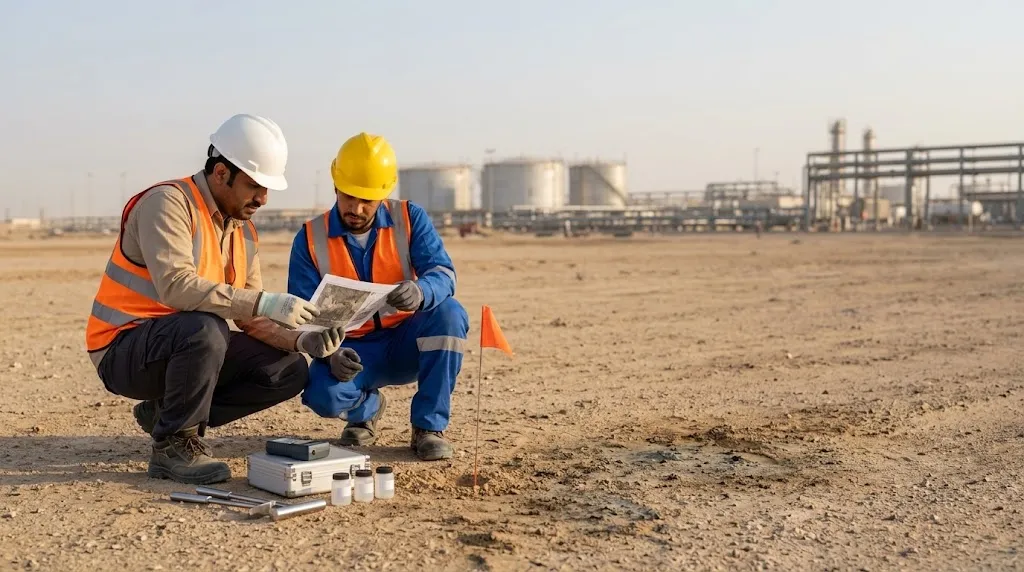
Terra Pulse supports oil-contaminated soil remediation in Saudi Arabia through soil contamination assessment, sampling and laboratory coordination, treatment planning and technology selection, followed by implementation coordination, performance monitoring and verification. The approach reflects contaminant type, depth, site conditions and intended land use.
A defined technical scope covering required works, implementation responsibilities, site controls and verification criteria.
Oil-contaminated soil remediation is a programme for assessing contamination and its risks, then selecting suitable measures to remove contaminants, reduce their concentrations or manage exposure in line with site objectives. It begins with understanding the release source and affected area before defining analyses, treatment methods, implementation and verification.
Treatment is not selected from soil colour or odour alone. Oil-contaminated soil treatment may differ from treatment of soil affected by petrol, diesel or mixed petroleum products. Removing a visible stain also does not establish that deeper soil or surrounding areas are free from contamination.
Assessment may be required following a known release, suspected land impact, or before excavation and reuse at a site with a history of fuel or oil storage.
Following a detected leak, unexplained product loss or signs of contamination around storage areas, pipelines, filling points and unloading locations.
Where repeated oil spills, unprotected material storage or incomplete operating records indicate a need to investigate ground conditions.
Where inspections or previous information suggest soil impacts near processes, equipment or material-handling areas.
When suspect soil is encountered during works, requiring assessment before it is moved or considered for reuse.
To review land condition before closure or redevelopment and connect remediation objectives with the proposed future use.
Where verification information is incomplete or existing results require further interpretation or follow-up.
This scope can be coordinated with contaminated site remediation services when other contaminants or multiple environmental media require a broader plan than petroleum soil treatment alone.
The scope depends on available information and site condition. It may cover assessment, planning, implementation coordination and monitoring, with clear laboratory and contractor responsibilities and any additional services required.
Gather information on products, releases, previous activities, drawings and studies to identify potential contamination sources.
Define investigation questions, sampling locations and depths, required analyses and information gaps.
Review data quality and connect results with product type, contaminant distribution, soil characteristics and exposure pathways.
Compare options according to technical suitability, implementability, residual waste, cost, timescale and project objectives.
Define work sequences, handling and containment areas, safety requirements, records and responsibilities.
Monitor performance, coordinate verification sampling, review findings and identify corrective work where needed.
Soil contamination assessment begins with a review of the petroleum source, release location and incident or activity history. Ground conditions, contaminant movement and possible exposure are then considered beyond the visible stain.
A conceptual site model connects the source with migration pathways and potentially affected people or environmental receptors. It is updated as sampling results become available to assess horizontal extent, depth and the need for investigation of water, vapours or neighbouring areas.
Where findings indicate groundwater impacts, a separate petroleum phase or a vapour exposure pathway, a specialist scope is reviewed. Soil treatment alone does not automatically address every affected environmental medium.
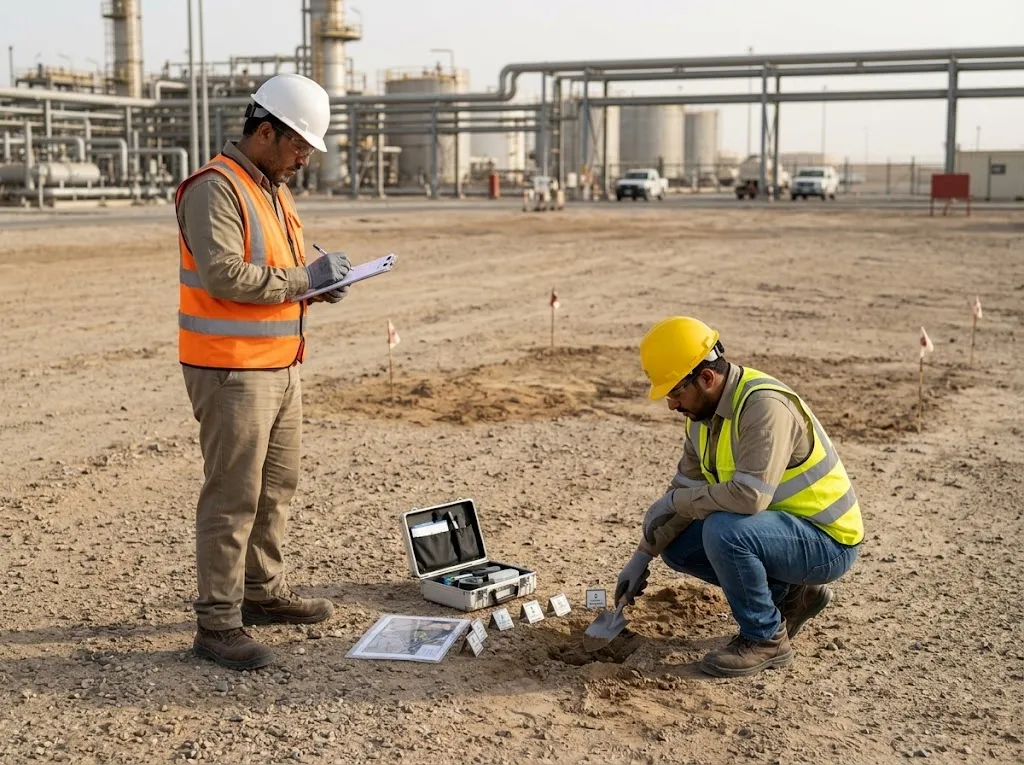
A sampling plan is prepared to answer specific questions: is contamination present, how far does it extend, which substances require analysis, and are the results sufficient for treatment selection or verification? Sample numbers are not based on area alone without considering site history and the distribution of suspected contamination.
Some volatile compounds require suitable collection and preservation procedures to limit losses before analysis. Fieldwork can be coordinated with environmental monitoring and measurement services through a clearly defined field and laboratory scope.
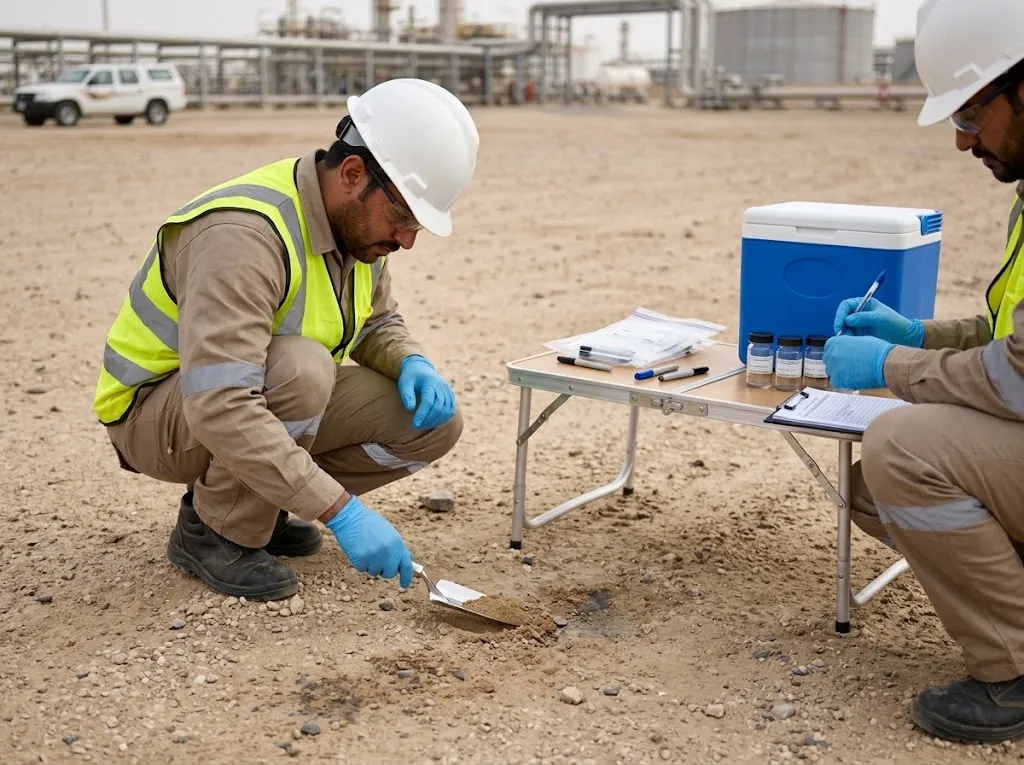
Petroleum products are mixtures with differing compositions, and their composition can change after release into the environment. Analyses are therefore reviewed with the laboratory according to product type, site history and investigation objectives rather than requesting one test for every situation.
Result interpretation considers analytical methods, reporting units, detection limits, qualified data and laboratory observations. Method sensitivity should be appropriate for the objectives against which the results will be assessed.
Used-oil contamination or industrial mixtures may require additional contaminant analyses where source information indicates a need. This is determined from available evidence rather than assuming that all oil contamination has the same composition.

Measurements of hydrocarbon groups defined by the analytical method. They support contamination characterisation, with their meaning and limitations reviewed during risk evaluation and treatment selection.
Benzene, toluene, ethylbenzene and xylenes. The need for analysis is reviewed according to petroleum products, contamination history and exposure pathways.
A group of compounds that may be relevant to particular products and sources. Testing and interpretation are defined within the investigation plan.
One acceptance value is not applied to every site or product. Assessment and verification criteria reflect appropriate project requirements, land use and exposure pathways.
Options are compared according to contaminant and soil properties, volume and depth, access, operating space, available time, and controls for emissions, water and waste. Treatability testing may be needed before full-scale implementation.
| Option | When Is It Considered? | What Must Be Checked? |
|---|---|---|
| Soil bioremediation | Where contaminants are biodegradable and suitable operating conditions can be provided. | Treatability, soil properties, co-contaminants, operating controls and monitoring requirements. |
| Excavation and off-site transfer | Where removal of a defined area is feasible and an appropriate authorised receiving route exists. | Excavation boundaries, material classification, destination acceptance, transport controls and verification of remaining soil. |
| Soil washing | Where soil and contaminant properties support separation or transfer to a stream that can be managed and treated. | Particle-size distribution, treatability results, wash water, fine fractions and remaining waste streams. |
| Thermal desorption | Where contaminant and material characteristics are compatible with an appropriate thermal process. | Energy, equipment, vapour treatment, verification of treated materials and management of process outputs. |
| Soil vapour extraction | For certain volatile compounds in unsaturated soil, subject to site conditions. | Soil permeability, moisture, groundwater depth, pilot-test findings and treatment of extracted vapours. |
These are options for technical assessment, not a statement that every method is suitable or automatically included in the service proposal. Technology, implementing parties, licensing requirements and testing are defined within the agreed scope.
Soil bioremediation uses microbial activity to degrade contaminants suitable for biological treatment. Engineered biopiles are one application that may be considered, with excavated soil managed in a purpose-designed treatment area.
Performance depends on contaminants, soil properties, aeration, moisture, temperature and nutrients where needed. Preliminary testing may be required, particularly for complex mixtures or conditions that can limit biological activity.
Bioremediation does not automatically address metals or every co-contaminant. More than one treatment route may be needed according to assessment findings.
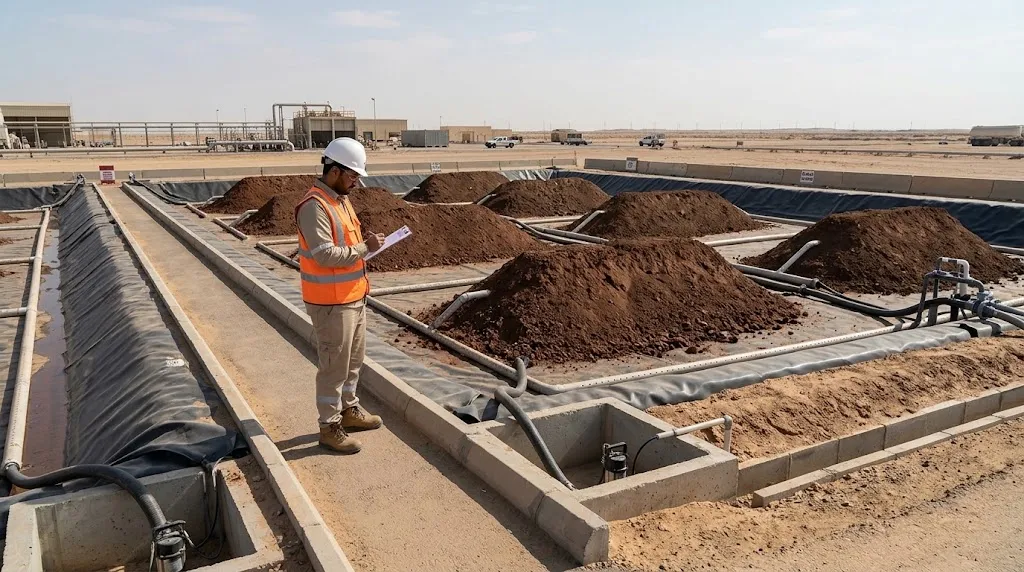
The project is divided into stages that allow information and technical decisions to be reviewed before implementation, with changes in conditions or scope documented.
Collect the location, activity history, product type, photographs, previous findings and intended land-treatment objectives.
Define study areas, coordinate sampling and analysis, and complete the information needed for technology selection.
Establish treatment objectives and compare technologies, testing needs, permit requirements and resources.
Define works, responsibilities, handling, containment, waste controls, records and verification.
Coordinate works with the relevant parties and review records, interim findings and required adjustments.
Review verification samples and remaining materials, prepare deliverables and identify further monitoring or corrective works.
The implementation plan defines how soil, water and other materials generated by the works are managed to prevent contamination from being transferred during excavation, storage or transport.
Define work and storage areas, equipment routes and material segregation based on assessment findings, with suitable ground protection and runoff-management arrangements.
Establish material characteristics, receiving routes and required records, coordinated with waste management services and suitable transport, treatment or disposal providers.
Review whether participating providers' authorised activities cover the required works and identify environmental permit and compliance requirements before implementation begins.
At operating facilities, remediation controls can be coordinated with environmental management plans for projects and facilities to clarify responsibilities, records and monitoring procedures.
A verification plan is prepared before works are completed. It identifies the areas or treatment batches to be checked, required contaminants, sampling methods and acceptance criteria linked to project objectives.
Monitoring treatment progress differs from demonstrating that objectives have been achieved. Interim results can help adjust operations, while verification requires data suitable for making decisions about the soil or site.
Improved colour or reduced odour does not prove successful remediation. Completion of works also does not automatically establish suitability for every use or regulatory closure.
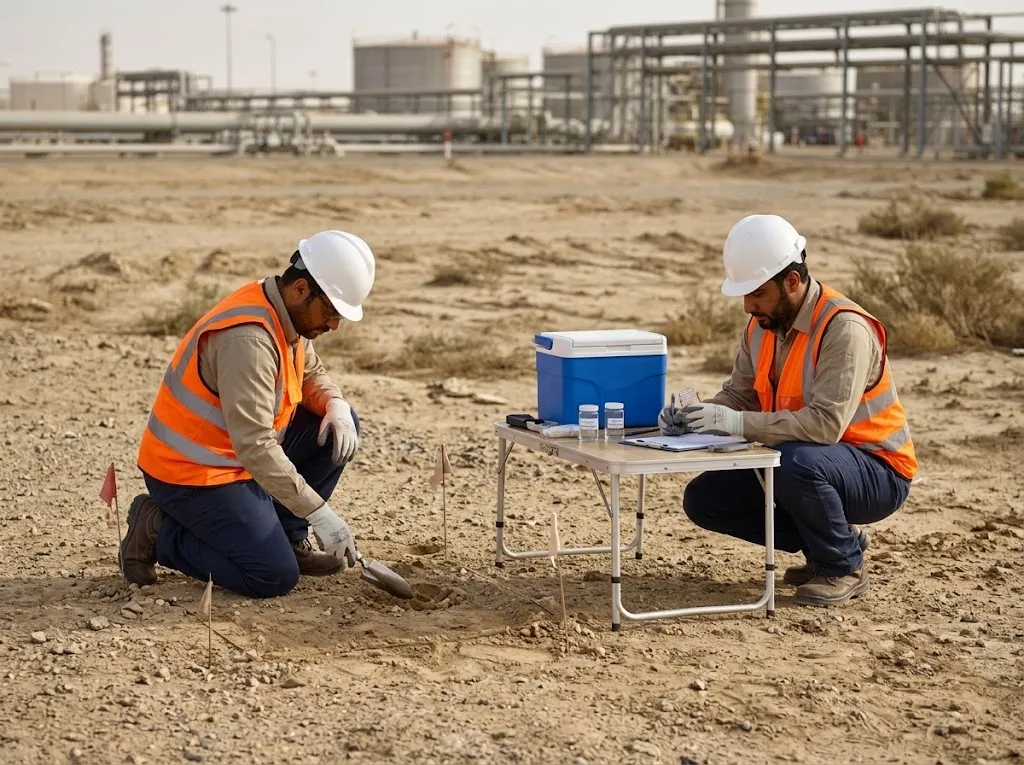
Deliverables are defined according to project stages and contracted services. The agreed package may include:
Source description, site history, available information, study boundaries and information gaps.
Sample locations and depths, required analyses, collection procedures, documentation and quality controls.
Interpretation of results, contaminant distribution and implications for technical decisions.
Options, selection rationale, implementation stages, resources, controls and party responsibilities.
Documentation of works, quantities, materials, interim results, observations and changes.
Verification findings, limits of conclusions, additional works or monitoring requirements.
Share the location, product type, photographs and available reports. These details help establish whether the next step is further assessment or a review of treatment options.
Remediation costs are not determined by site area alone. Material volume, contamination depth, contaminant type, technology, implementation controls and verification are reviewed before a technical and commercial proposal is prepared.
Assessment preparation, treatment operation and verification may have different timescales. Where contamination extent is unknown, the investigation scope is established first to support a more reliable estimate of remediation works.
It begins with a review of the contamination source and site history, followed by definition of the investigation, sampling and analytical scope. Findings support treatment objectives, technology comparison and implementation and verification planning.
Yes. Products may differ in composition, volatility, biodegradability and co-contaminants. Analyses and treatment methods are therefore selected according to the product, soil properties and investigation findings.
No. They can help guide an inspection, but they do not establish contaminant type, concentration or depth, soil suitability or treatment completion.
No. Suitability depends on contaminant biodegradability, soil properties, operating conditions and co-contaminants. Treatability testing or a different or complementary treatment route may be needed.
Not always. Excavation and transport are compared with in situ and ex situ treatment options, considering depth, contaminants, access, risks, requirements and material receiving arrangements.
Sample numbers, locations and depths reflect study objectives, site history, suspected contamination distribution and investigation findings. One sampling density does not suit every site.
Soil remediation does not automatically include groundwater treatment. Where findings indicate groundwater impacts, an appropriate assessment, treatment and monitoring scope is defined and coordinated with soil works.
After reviewing verification results, material characteristics, proposed use, acceptance criteria and applicable requirements. Completed treatment operations or improved appearance alone do not establish suitability for reuse.
The scope can include assessment, sampling and laboratory coordination, planning, implementation coordination and verification, or selected stages. Laboratory and contractor roles and deliverables are defined in the technical proposal.
Cost and duration depend on soil volume, contamination depth, contaminant type, technology, transport, implementation controls and verification. Estimates follow a review of available information and completion of the data needed to define the scope.
Some projects need supporting services and studies to coordinate treatment with operations, permitting and management of materials generated by the works.
A broader scope for site assessment and coordinated management of other contaminants or affected environmental media.
Explore Contaminated Site ServicesGuidance on identification, classification, storage, transport and documentation of waste-management routes.
Read the Industrial Waste GuideConnect site procedures with monitoring, responsibilities, records, operating controls and follow-up.
Explore Management Plan PreparationFollowing contamination-treatment verification, the need for environmental rehabilitation of degraded land and vegetation can be reviewed according to intended use. Additional specialist assessment can be coordinated through environmental consulting and studies where needed.
Images illustrate service activities and do not document completed Terra Pulse projects, company-owned laboratories or actual treatment outcomes.
Whether the site is affected by oil, fuel or lubricants, share its details and available analytical reports with Terra Pulse. We review soil contamination assessment needs, treatment options, implementation coordination and verification within a scope suited to your site.
Or send your enquiry through our contact page