
Before site activities begin
Identify relevant activities, site requirements and preventive measures before establishing work areas or mobilising contractors and equipment.

Terra Pulse supports environmental management plan preparation by connecting your activity, site information and applicable requirements with practical mitigation measures and monitoring arrangements. We define the plan scope, implementation responsibilities and records needed to guide project and facility teams during construction or operation.
A scope tailored to your activity and project stage, with defined actions, responsibilities and reviewable deliverables.
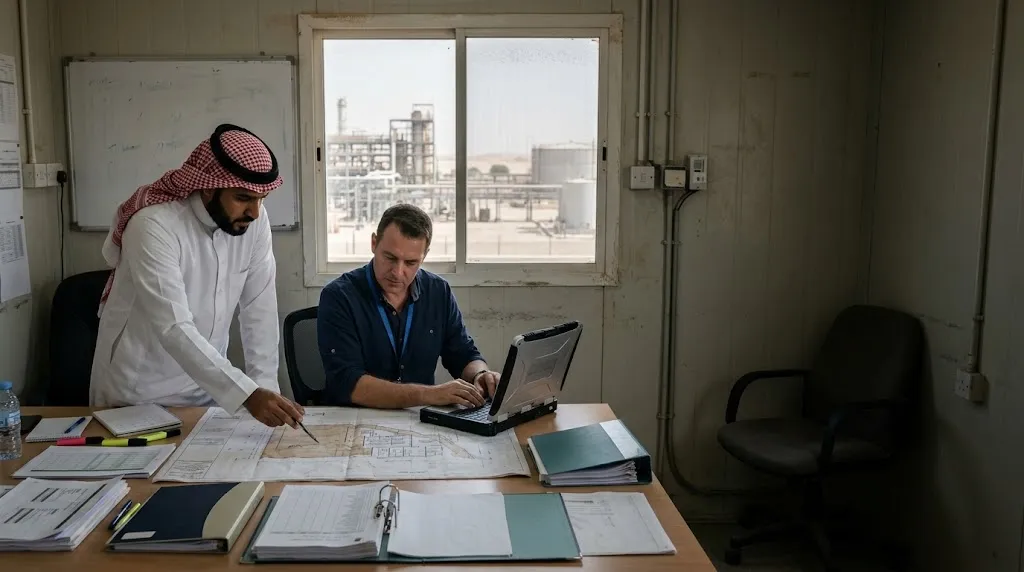
The service includes reviewing project or facility information, identifying environmental aspects and potential impacts, developing mitigation measures, assigning responsibilities, and organising monitoring, inspections and records. Plan content depends on the activity, location, project stage and relevant requirements.
The purpose is to define what must happen on site, who is responsible, how results are reviewed and how findings are addressed. The scope may cover a new plan or the review and update of an existing document.
The need for a plan and its content should be reviewed against the activity, classification, stage, permit conditions and contractual requirements. Environmental management plan preparation can be discussed in the following situations.
Identify relevant activities, site requirements and preventive measures before establishing work areas or mobilising contractors and equipment.
Connect earthworks, equipment, storage, transport and waste handling with procedures that can be implemented and checked throughout construction.
Examine processes, records and existing controls, then define responsibilities and follow-up arrangements appropriate to the facility and its assets.
Review changes to capacity, equipment, materials or work areas and update the relevant procedures and monitoring requirements.
Translate relevant conditions and recommendations into actions, owners, schedules and records that support implementation reviews.
Review the causes of environmental findings and define corrective measures, closure evidence and arrangements to address recurrence within the agreed scope.
Requirements are assessed for the specific activity. One plan cannot suit every project. Applicable authority requirements, permit conditions and available studies are reviewed before the preparation scope is agreed. This can be coordinated with environmental and industrial permit support.
The scope is defined after reviewing site information and available documents. The following components are selected according to the assignment, with additional surveys, measurements or specialist work identified separately.
Document the location, activity, phases, processes, materials and equipment, including work areas, participating parties and responsibility boundaries.
Organise applicable conditions and relevant recommendations, connecting each requirement with an action, responsible party and appropriate record.
Review emissions, noise, waste, discharges and resource use, then prioritise relevant aspects through a methodology suited to the project.
Develop controls linked to the source, location and project stage, with checks, implementation evidence and responses to identified gaps.
Define what needs measurement or inspection, where and when it takes place, who reviews results and which findings require action.
Organise generation points, segregation, storage, handling, handover and records, alongside controls for materials with potential environmental impacts.
Identify relevant incident scenarios, communication and escalation routes, response resources and personnel responsibilities under site procedures.
Assign responsibilities to management, supervisors, contractors and service providers, with awareness and training topics matched to their activities.
Define record templates, finding and corrective-action tracking, and the changes that should trigger a review of the plan.
Assessment begins with the site layout, process descriptions and available records. The team then identifies what requires field verification, including storage areas, equipment, transport and drainage routes, nearby activities and potentially affected receptors.
An environmental aspect is distinguished from its potential impact. Oil storage is an aspect associated with an activity; oil reaching soil after a release is a potential impact requiring appropriate prevention and response arrangements.
Where a broader study or additional information is needed, the scope can be coordinated with environmental consulting and studies.
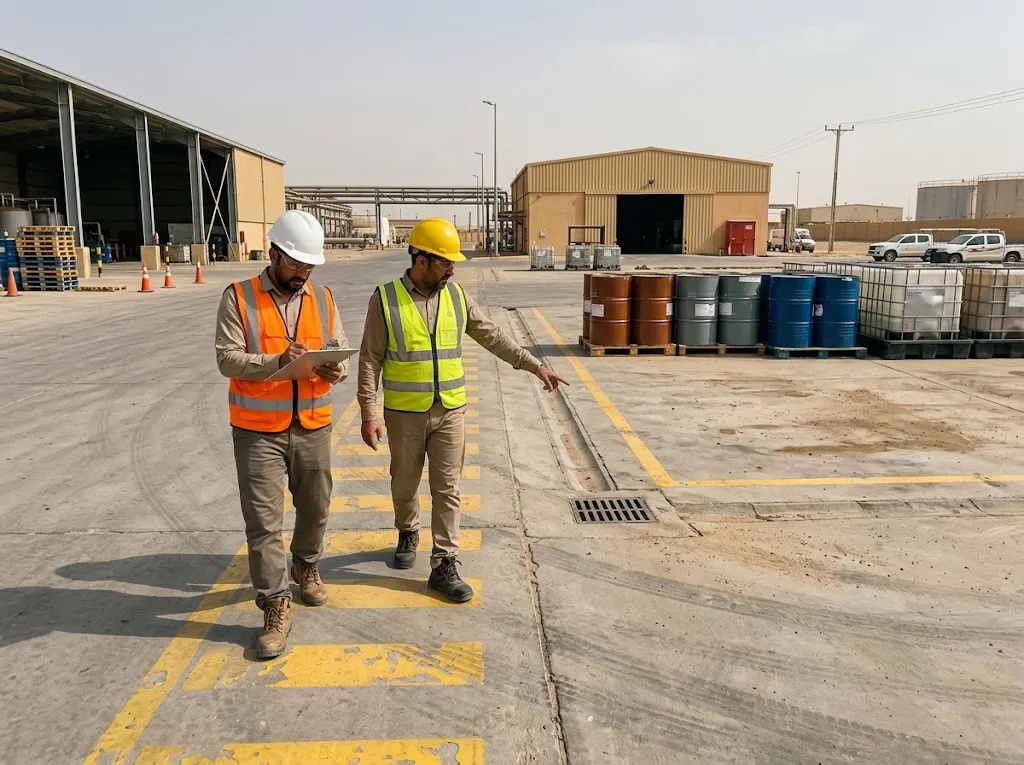
Activities during construction differ from those in continuing operations. A construction environmental management plan therefore needs stage-specific controls, while an operational plan addresses the facility’s ongoing processes. Information and responsibilities should also be transferred during handover.
| Component | Construction Stage | Operational Stage |
|---|---|---|
| Activities | Site preparation, excavation, equipment movement and temporary storage. | Operating processes, maintenance, storage and resource use. |
| Potential sources | Dust, noise, construction waste and activity-related releases. | Emissions, discharges, waste and equipment associated with the activity. |
| Responsibilities | Coordination between the client, contractor, supervisor and service providers. | Defined roles for management, operations, maintenance and environmental follow-up. |
| Monitoring | Tracking relevant work activities, locations and changing construction stages. | A programme linked to sources, operating conditions and applicable requirements. |
| Updates | Changes to work areas, equipment, programmes or contractors. | Changes to processes, materials, assets or obligations. |
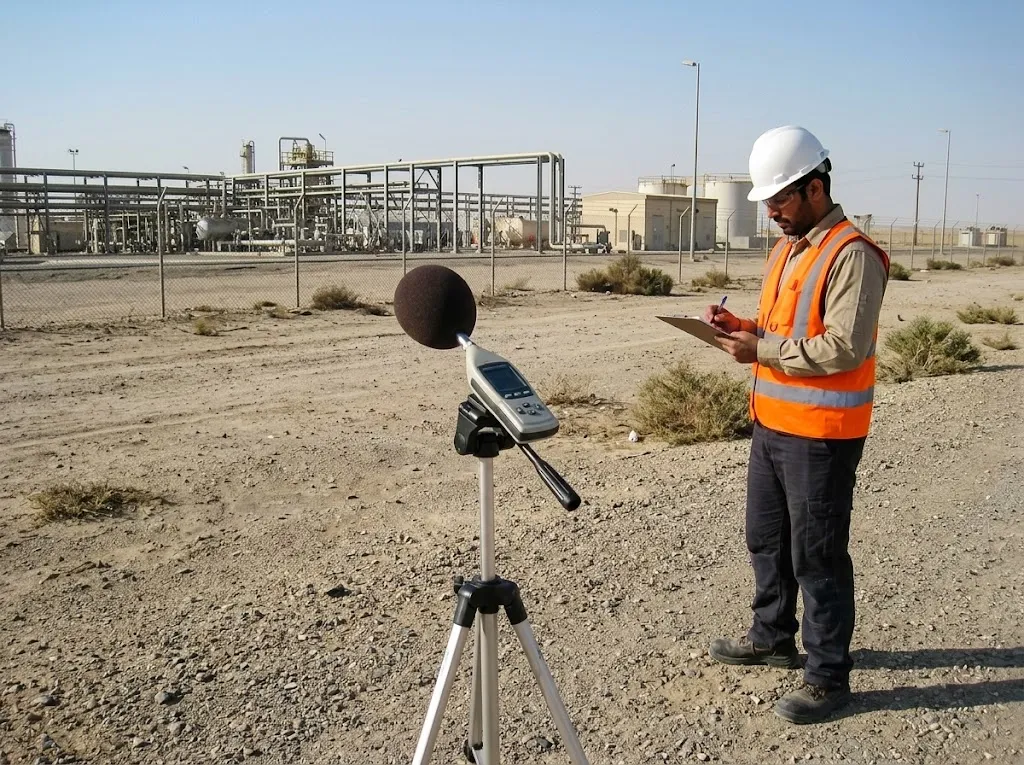
Every activity does not require the same measurements. An environmental monitoring plan reviews sources, permit conditions and available studies to identify relevant monitoring, which may include air, noise, water or soil where appropriate to the activity.
The programme defines indicators, locations, methods, frequency and responsibility for implementation and review. It also identifies comparison criteria and the response to unusual readings or results requiring action.
Programme preparation defines what needs monitoring. Field measurements and laboratory analysis are specified separately in the proposal or coordinated through environmental monitoring and measurement services.
A recommendation becomes an actionable control when it identifies the location, responsible party, timing and verification method. Measures are selected against the impact source, pathway and actual working conditions.
For liquid storage, procedures may address container compatibility, location, containment, inspections and reporting of releases. For earthworks, the plan may review dust-generating areas, vehicle movement, suitable controls and checks of their effectiveness.
Waste procedures connect generation points with segregation, storage, handover and records. Where specialist support is needed, this can be coordinated with waste and landfill management services.
For each control: define the action, location, owner, timing, verification method and closure evidence when a finding is raised.
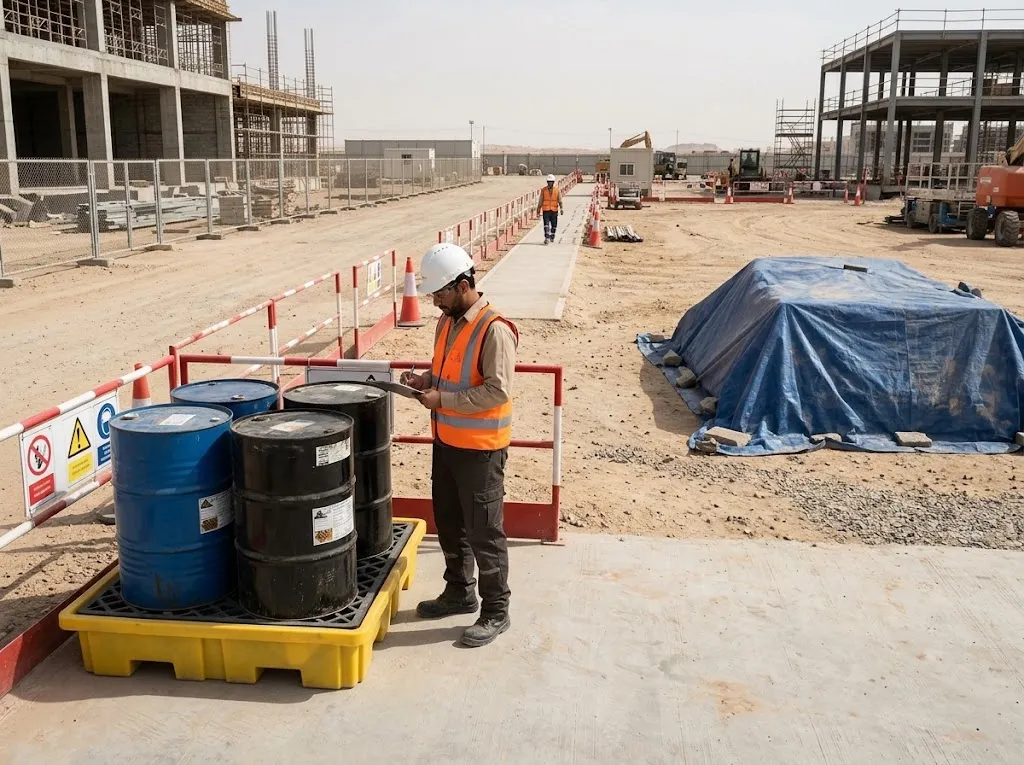
Work begins with a review of the request, required inputs and service boundaries. Preparation, review and delivery stages are then organised around the project.
Review the activity, location, stage and purpose of the plan. Identify documents, visits, deliverables and potential additional work.
Examine available drawings, studies, permits and records. Identify information gaps and matters requiring field verification.
Organise sources and priorities, then prepare controls, responsibilities, monitoring arrangements and records suited to the activity.
Check process descriptions and implementation practicality, including coordination points, assigned roles and incomplete information.
Issue the defined version and appendices. Explain updates, comment responses and any implementation support included in the contract.
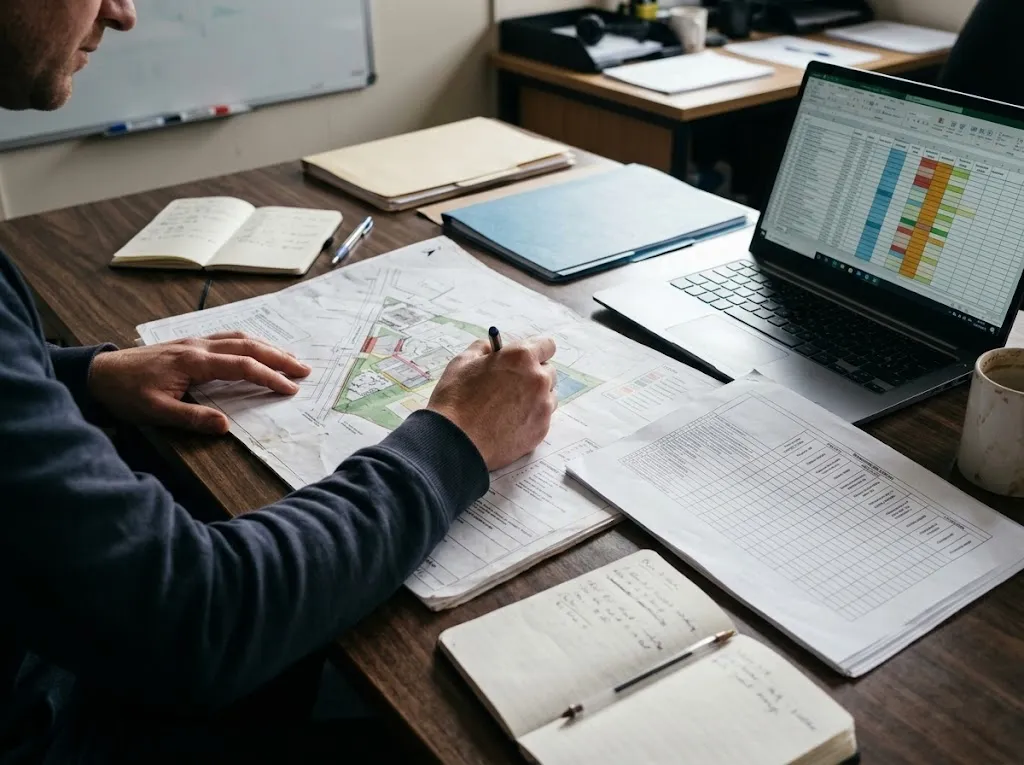
The proposal defines required outputs, delivery formats, appendices and review boundaries. Depending on the scope, the package may include the following.
Activity, location and stage descriptions, environmental aspects, relevant requirements, and management and control procedures.
Each action connected to its location, timing, responsible party and verification method, with coordination and escalation points.
Relevant indicators, measurements and inspections, including locations, frequency, comparison criteria and arrangements for responding to findings.
Checklists, finding and corrective-action records, follow-up forms, drawings and technical appendices according to project needs.
Share the current version and proposed changes to discuss the review scope.
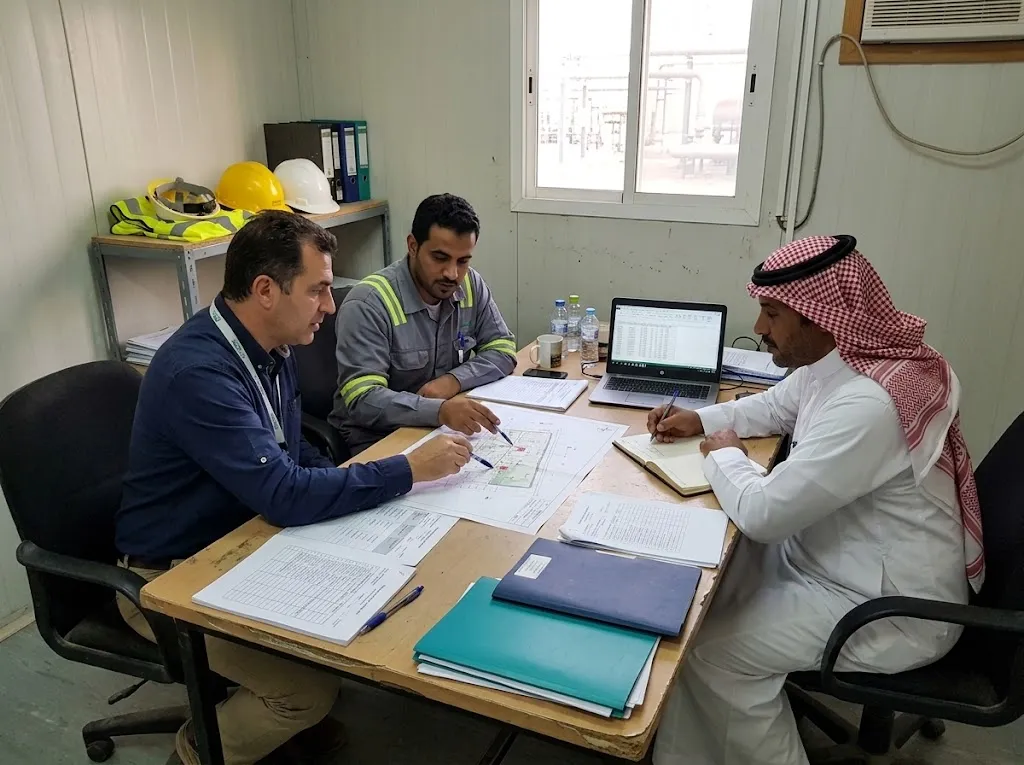
A plan remains useful after delivery through implementation, record keeping and review of results. The project team performs its assigned responsibilities, while additional awareness, review or follow-up support can be agreed within the service scope.
Implementation reviews help identify incomplete actions, recurring findings and changes requiring revised controls. Each finding should be connected to an owner, due date and verification evidence before closure.
The quality of environmental management plan preparation depends on accurate information, workable controls and clear responsibilities, rather than document length alone.
Distinguish confirmed information from assumptions and gaps. Connect site descriptions to available drawings and records.
Select measures linked to sources, project stages and working conditions, then review their practicality with the responsible parties.
Identify the plan version, date, changes and responsibilities so participants can work from the current document.
An environmental management plan for projects or an environmental management plan for facilities can be reviewed for the following settings. Details depend on the activity, available site information and applicable requirements.
Construction priorities may include dust, noise, waste and equipment movement. An operating facility may focus on emissions, discharges, maintenance and storage. Assessment determines the relevant scope instead of applying a fixed package across every sector.
The service name alone cannot establish a price or delivery date. Cost and timing depend on activity scale, site complexity, available information, required visits or measurements, deliverables and the agreed review scope.
Included work and additional services are clarified before preparation begins, including measurements, visits and changes to the agreed scope.
Where information is incomplete, required inputs and verification needs are identified before deliverables and timing are finalised.
It is the review of activity and site information and relevant requirements, followed by the development of mitigation and monitoring procedures, responsibilities, records and review arrangements suited to the project scope.
No. The need for a plan and its content depend on the activity, classification, location, project stage and permit or contractual conditions. Applicable requirements are reviewed before the preparation scope is defined.
A construction environmental management plan addresses temporary activities such as excavation, equipment movement, storage and construction waste. An operational plan addresses continuing processes, maintenance, emissions, discharges and waste according to the facility’s activity.
Programme preparation defines indicators, locations, methods, frequency and responsibilities. Field measurements, sampling and laboratory analysis are specified separately or included in the proposal when expressly agreed.
Yes. The current plan and supporting documents can be reviewed to identify gaps and update controls, responsibilities and monitoring, particularly when activities, equipment, site conditions or applicable requirements change.
Initial information includes the activity, location, project stage, process description, site layout, available environmental documents, purpose of the plan and required date. Further inputs are identified after the initial review.
Timing and cost are established after reviewing activity scale, site complexity, available information, required visits or measurements, deliverables and review scope. The project-specific proposal defines the schedule and price.
No. Document delivery is separate from competent-authority review or approval. Submission and responses to comments are defined within the service scope, while approval decisions remain subject to authority requirements and the specific application.
Explore these guides for more detail on plan components, preparation steps and the relationship between management plans, environmental studies and permits.
Plan components, preparation steps, responsibilities and a practical review checklist.
Read the EMP Preparation GuideUnderstand study stages, information needs, impacts and project alternatives.
Explore the EIA GuideReview the permit pathway and the importance of activity and stage-specific requirements.
Read the Environmental Permits GuideShare your activity, location, project stage and available documents. This information helps us discuss environmental management plan preparation, required inputs, deliverables and the appropriate next step.